Cart (0 Items)
Your cart is currently empty.
View Products

AI-driven Affinity Maturation Services
A pharmaceutical company had identified a promising mouse antibody against a human antigen for neurodegenerative disease diagnostics, but its sensitivity was too low for reliable detection. ProteoGenix leveraged AI-driven paratope–epitope mapping and targeted mutation design to select and test 20 variants, yielding lead candidates with up to a 20-fold affinity improvement—without compromising developability or backbone structural stability.
AI-driven Antibody Humanization Service
ProteoGenix supported a small French biotech in humanizing a mouse-derived antibody for cervical cancer in 3 weeks, using an AI-guided, stepwise mutation design strategy across 22 humanized variants. Structural checks plus ELISA validation confirmed reduced immunogenicity risk (>80% homology to the human sequence) while improving binding, with several variants reaching up to a 2.6-fold increase—leading to three prioritized candidates.

ProteoGenix helped Heidelberg University rapidly progress from antigen to validated NANOBODY® leads* through phage display expertise, rigorous screening, and dedicated scientific support.
By combining AI predictions with experimental validation, ProteoGenix delivered reliable antibody–antigen insights, reducing risks and timelines and guiding therapeutic, diagnostic, and IP strategies.
ProteoGenix rapidly generated high-affinity TCR-like antibodies against a difficult peptide–HLA target, using rabbit immunization and a custom phage display library. This approach delivered three validated candidates that advanced the client’s CAR-T immunotherapy program.
Custom Diagnostic & research Antibody Services
ProteoGenix’s antibodies and data helped the team confirm Unc5B’s role in blood–brain barrier integrity. The study showed how Netrin-1–Unc5B signaling supports stability and that antibody blockade can safely open the barrier, bridging research with neuroscience applications.
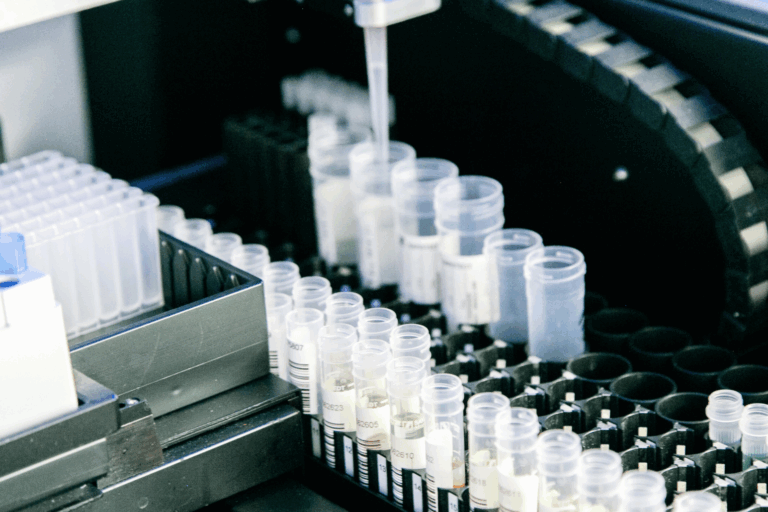
Transient antibody production services
The scale-up confirmed that the candidate remains promising for further development. The client obtained the large quantity they required under strict purity conditions, allowing them to confidently continue their program.
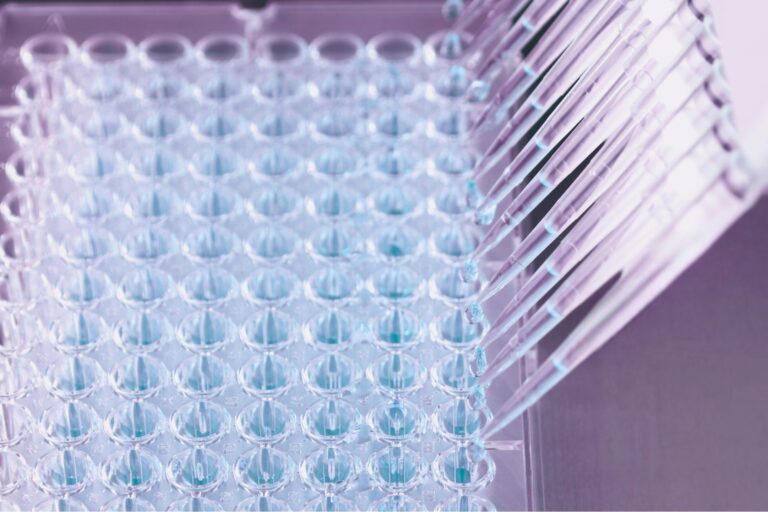
Transient antibody production services
Early yield evaluation with XtenCHO® Race enabled a rapid first selection of candidates. This allowed the client to save time and money while keeping the quality and consistency needed to confidently advance their therapeutic program with their new variants selection.
ProteoGenix engineered highly specific antibodies for Recce’s RECCE® 327, enabling reliable pharmacokinetic assays and supporting the drug’s progress through key regulators.
ProteoGenix delivered highly specific antibodies to detect intact EpIeTTX1, giving TELUM the precise pharmacokinetic data needed to advance their antimicrobial therapy.

ProteoGenix created a potent neutralizing IL-17A antibody that enabled the Naples and Birmingham teams to block IL-17A-driven inflammation and advance a patented therapeutic strategy for autoimmune diseases.

ProteoGenix and Cube Biotech created two fully human, high-specificity antibodies against native P2X4, unlocking new opportunities for drug discovery in cardiovascular and inflammatory diseases.

Antibody Phage Display for Diagnostic Application
ProteoGenix leveraged phage display to deliver high-affinity antibodies against a difficult cell surface target, helping UCL advance their research toward preclinical development.
Antibody Library Generation for Phage Display
ProteoGenix used its LiAb-SFMAX™ phage display platform to generate a fully human antibody targeting TREM-2, enabling Isar Bioscience to advance a patented therapeutic candidate for Alzheimer’s disease.

Hybridoma development services
ProteoGenix generated a cross-reactive antibody that helped uncover how shared epitopes between PLA2R and THSD7A may trigger membranous nephropathy, enabling researchers to clarify disease mechanisms and advance early diagnostic strategies.

Hybridoma development services
Discover how antibody optimization is key for the translation development of complex molecules such as NANOBODY® Proteins*

Ascites and Hybridoma cell culture antibody production
ProteoGenix developed variant-specific antibodies that detect a single-point mutation in IGLV3-21, helping researchers identify high-risk CLL patients and improve early prognosis assessment.
*NANOBODY® compound is a registered trademark of Ablynx N.V.


Need a personalized consultation or a quote ? Message us and we will get back to you in less than 48 hours.