Cart (0 Items)
Your cart is currently empty.
View Products



| Size | 100ug, 1MG |
|---|---|
| Isotype | IgG1, kappa |
| Brand | ProteoGenix |
| Product type | Primary Antibodies |
| Clonality | Monoclonal Antibody |
| Expression system | Mammalian cells |
| Applications | Elisa, WB |
| Product name | Etigilimab Biosimilar - Anti-TIGIT, VSTM3 mAb - Research Grade |
|---|---|
| Source | CAS 2044984-83-8 |
| Species | Humanized |
| Purity | >85% |
| Buffer | PBS buffer PH7.5 |
| Delivery condition | Blue ice (+4°C) |
| Delivery Time | 3-5 days if in stock; 3-5 weeks if production needed |
| Storage condition | store at -80°C |
| Brand | ProteoGenix |
| Aliases /Synonyms | Etigilimab,OMP-313M32,TIGIT, VSTM3,anti-TIGIT, VSTM3 |
| Reference | PX-TA1507 |
| Note | For research use only. Not suitable for clinical or therapeutic use. |
| Isotype | IgG1, kappa |
| Clonality | Monoclonal Antibody |
Etigilimab Biosimilar, also known as Anti-TIGIT, VSTM3 mAb, is a promising therapeutic antibody targeting the T cell immunoglobulin and ITIM domain (TIGIT) protein. This biosimilar is a research grade version of the original Etigilimab, which is currently in clinical trials for various types of cancer. In this article, we will explore the structure, activity, and potential applications of this novel antibody.
Etigilimab Biosimilar is a monoclonal antibody (mAb) that specifically binds to the TIGIT protein. It is composed of two heavy chains and two light chains, each containing a variable region and a constant region. The variable region is responsible for binding to the TIGIT protein, while the constant region determines the antibody’s effector functions.
TIGIT is a co-inhibitory receptor expressed on the surface of T cells, natural killer (NK) cells, and regulatory T cells (Tregs). It interacts with its ligands, CD155 and CD112, which are expressed on antigen-presenting cells and tumor cells. This interaction leads to the inhibition of T cell activation and proliferation, resulting in immune suppression and tumor immune evasion.
Etigilimab Biosimilar works by blocking the interaction between TIGIT and its ligands, thus preventing the inhibitory signal and promoting T cell activation. This can enhance the anti-tumor immune response and potentially lead to tumor regression.
Due to its mechanism of action, Etigilimab Biosimilar has the potential to be used in various therapeutic settings. Some potential applications include:
1.
The immune system plays a crucial role in recognizing and eliminating cancer cells. However, tumors can evade the immune response by expressing immune checkpoint proteins, such as TIGIT. By targeting TIGIT, Etigilimab Biosimilar can unleash the immune system’s full potential and enhance the anti-tumor response. It is currently being investigated in clinical trials for various types of cancer, including non-small cell lung cancer, melanoma, and lymphoma.
2. Autoimmune Diseases TIGIT has been implicated in the pathogenesis of various autoimmune diseases, such as rheumatoid arthritis and multiple sclerosis. By blocking TIGIT, Etigilimab Biosimilar can potentially suppress the immune response and alleviate symptoms of these diseases.
3. Combination Therapy Etigilimab Biosimilar has also shown promising results in combination with other immunotherapies, such as PD-1 inhibitors. This combination can potentially enhance the anti-tumor response and overcome resistance to single-agent therapy.
In summary, Etigilimab Biosimilar is a novel therapeutic antibody targeting the TIGIT protein. Its structure, activity, and potential applications make it a promising candidate for cancer immunotherapy and other immune-related diseases. Further research and clinical trials are needed to fully understand its potential and establish its efficacy and safety.
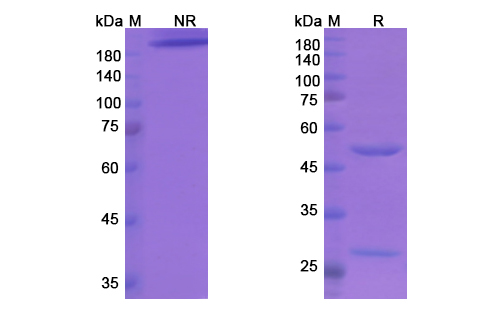
Etigilimab Biosimilar - Anti-TIGIT mAb - Research Grade on SDS-PAGE under reducing and non-reducing conditions. The gel was stained overnight with Coomassie Blue.. The purity of the antibody is greater than 95%.
Related products


Send us a message from the form below
Reviews
There are no reviews yet.