Cart (0 Items)
Your cart is currently empty.
View Products



| Size | 100ug, 1MG |
|---|---|
| Isotype | IgG1, kappa |
| Brand | ProteoGenix |
| Product type | Primary Antibodies |
| Clonality | Monoclonal Antibody |
| Expression system | Mammalian cells |
| Applications | Elisa, WB |
| Product name | Meplazumab Biosimilar - Anti-CD147 mAb - Research Grade |
|---|---|
| Species | Humanized |
| Purity | >85% |
| Buffer | PBS buffer PH7.5 |
| Delivery condition | Blue ice (+4°C) |
| Delivery Time | 3-5 days if in stock; 3-5 weeks if production needed |
| Storage condition | store at -80°C |
| Brand | ProteoGenix |
| Aliases /Synonyms | Meplazumab,Basigin,BSG,5F7,CD147,EMMPRIN,M6,OK,TCSF,CD147,anti-CD147 |
| Reference | PX-TA1619 |
| Note | For research use only. Not suitable for clinical or therapeutic use. |
| Isotype | IgG1, kappa |
| Clonality | Monoclonal Antibody |
Meplazumab biosimilar, also known as anti-CD147 mAb, is a monoclonal antibody that has shown great potential as a therapeutic agent in various diseases. This biosimilar is a research grade product that has been extensively studied for its structure, activity, and potential applications. In this article, we will delve into the details of Meplazumab biosimilar and explore its role as an antibody and therapeutic target.
Meplazumab biosimilar is a recombinant humanized monoclonal antibody that specifically targets the CD147 protein. It is composed of two heavy chains and two light chains, with a molecular weight of approximately 150 kDa. The antibody has a unique structure that allows it to bind to the CD147 protein with high affinity and specificity.
The primary function of Meplazumab biosimilar is to block the activity of CD147, a cell surface glycoprotein that is involved in various physiological and pathological processes. CD147 is known to play a critical role in tumor growth, invasion, and metastasis, making it an attractive therapeutic target. Meplazumab biosimilar binds to CD147 and inhibits its interaction with other proteins, thus interfering with its downstream signaling pathways. This results in the suppression of tumor growth and progression.
Meplazumab biosimilar has shown great potential as a therapeutic agent in various diseases, especially in cancer. As mentioned earlier, CD147 is highly expressed in tumor cells and is associated with tumor growth and metastasis. By targeting CD147, Meplazumab biosimilar has the potential to inhibit tumor growth and metastasis, making it a promising candidate for cancer therapy. In addition to cancer, Meplazumab biosimilar has also been studied for its potential in other diseases such as inflammatory disorders, cardiovascular diseases, and infectious diseases.
In cancer, Meplazumab biosimilar has been shown to have a synergistic effect when used in combination with chemotherapy or other targeted therapies. This combination approach has the potential to improve the efficacy of cancer treatment and reduce the risk of drug resistance. In addition, Meplazumab biosimilar has also been studied for its use in immunotherapy, where it can enhance the anti-tumor immune response by targeting CD147-expressing immune cells.
In inflammatory disorders, Meplazumab biosimilar has shown promising results in preclinical studies for its ability to suppress inflammation and tissue damage. This makes it a potential therapeutic option for diseases such as rheumatoid arthritis, psoriasis, and inflammatory bowel disease.
In cardiovascular diseases, Meplazumab biosimilar has shown potential in reducing atherosclerotic plaque formation and improving vascular function. This is attributed to its ability to inhibit the migration and proliferation of smooth muscle cells, which are key players in the development of atherosclerosis.
In infectious diseases, Meplazumab biosimilar has been studied for its potential in inhibiting viral entry and replication. This makes it a potential candidate for the treatment of viral infections such as HIV, hepatitis B, and hepatitis C.
In conclusion, Meplazumab biosimilar is a promising therapeutic agent that targets the CD147 protein. Its unique structure and activity make it a potential candidate for the treatment of various diseases, especially cancer. Further research and clinical trials are needed to fully explore the potential of this biosimilar and its application in different diseases.
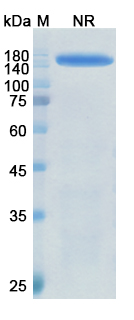
Meplazumab Biosimilar - Anti-CD147;BSG mAb - Research Grade on SDS-PAGE under reducing and non-reducing conditions. The gel was stained overnight with Coomassie Blue.. The purity of the antibody is greater than 95%.
Related products



Send us a message from the form below
Reviews
There are no reviews yet.