🚀 Special Offer🚀Get 25% off on your bioreagent online order (except Micelles and Nanodiscs), with the code: PROTEOSHOP25

📢 New ! Accelerate your Antibody Development with Ready-to-use Stable Cell Pools

Explore Now
Brand: ProteoGenix

CD81 Recombinant Protein

Host species:
Escherichia coli (E.coli)
Origin species:
Homo sapiens (Human)
Uniprot ID:
P60033
Molecular weight:
10.59kDa

$484.00

100ug + 484 loyalty points
His Phe113~Lys201
  • In Stock
  • Wide range of unique reagents
  • Fast worldwide delivery

CD81 Recombinant Protein

Product name CD81 Recombinant Protein
Uniprot ID P60033
Uniprot link http://www.uniprot.org/uniprot/P60033
Origin species Homo sapiens (Human)
Expression system Prokaryotic expression
Sequence FVNKDQIAKDVKQFYDQALQQAVVDDDANNAKAVVKTFHETLDCCGSSTLTALTTSVLKNNLCPSGSNIISNLFKEDCHQKIDDLFSGK
Molecular weight 10.59kDa
Protein delivered with Tag? N-terminal His Tag
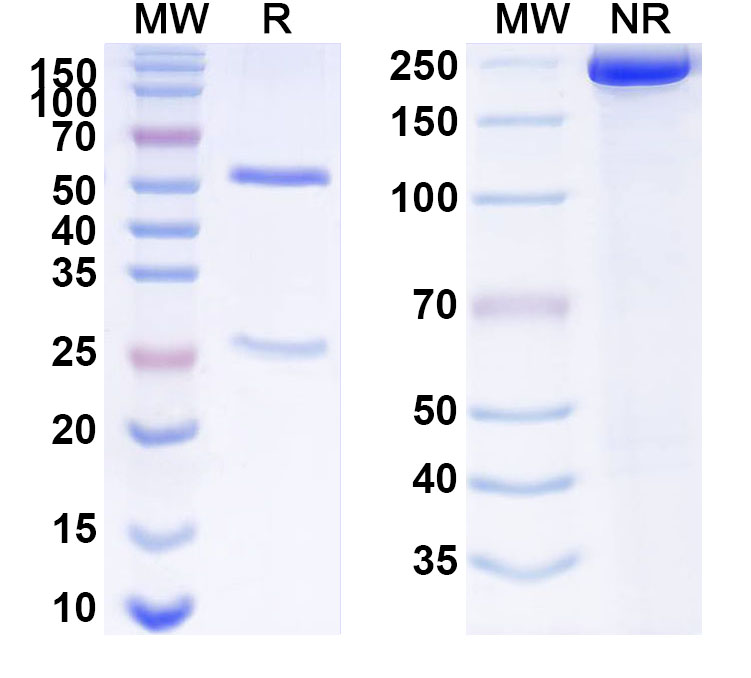
Purity estimated >90% by SDS-PAGE
Buffer PBS pH7.5
Delivery condition Dry Ice
Storage condition Store at - 20℃ to -80℃. It is recommended that the protein be aliquoted for optimal storage.
Brand ProteoGenix
Host species Escherichia coli (E.coli)
Fragment Type Phe113~Lys201
Aliases /Synonyms TAPA1, TSPAN28
Reference PX-P4091
Note For research use only
Background information Array
Molecular Constructor
His Phe113~Lys201

Introduction

CD81 is a cell surface protein that belongs to the tetraspanin family. It is found in various cell types, including immune cells, endothelial cells, and epithelial cells. CD81 plays a crucial role in cell signaling, cell adhesion, and membrane fusion. In recent years, CD81 has emerged as a potential drug target due to its involvement in various diseases, making it a promising candidate for therapeutic interventions. In this article, we will discuss the structure, activity, and potential applications of CD81 recombinant protein.

Structure of CD81

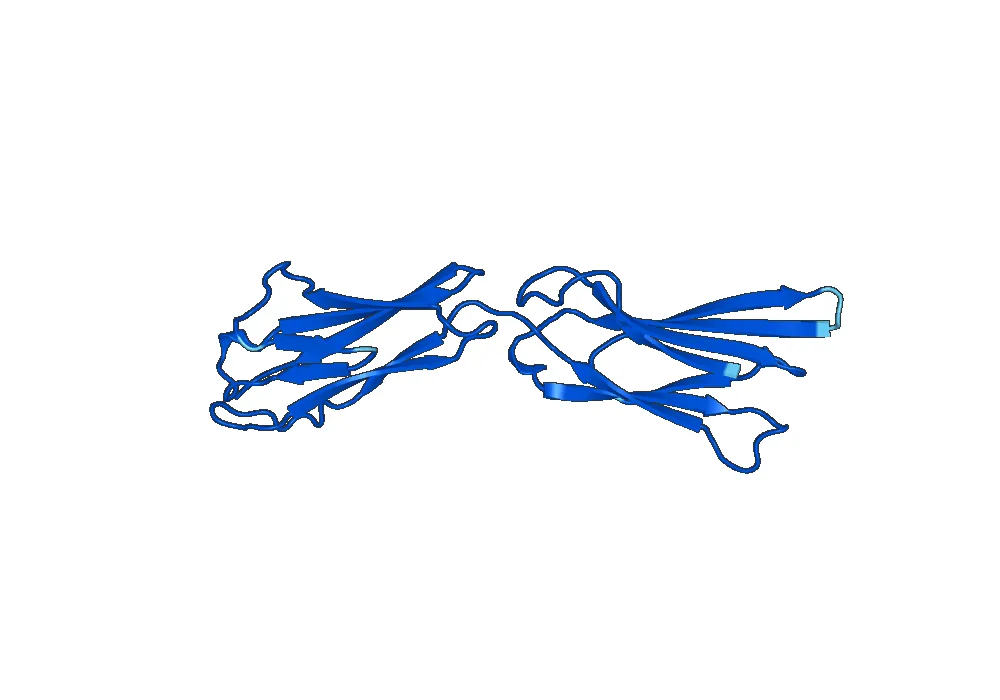
CD81 is a transmembrane protein that consists of two extracellular loops, a short cytoplasmic tail, and four transmembrane domains. The extracellular loops are responsible for the interaction with other proteins, while the transmembrane domains facilitate the anchoring of CD81 to the cell membrane. The extracellular loops also contain four conserved cysteine residues that form disulfide bonds, contributing to the stability of the protein structure.

Activity of CD81

CD81 is involved in various cellular processes, including cell adhesion, migration, proliferation, and signaling. It is a key player in the formation of tetraspanin-enriched microdomains (TEMs) on the cell membrane, which are essential for the organization and function of membrane proteins. CD81 also interacts with other tetraspanins, such as CD9, CD63, and CD82, to form TEMs, which regulate the activity of signaling molecules and modulate various cellular processes.

CD81 is also known to interact with several proteins, including integrins, major histocompatibility complex (MHC) class II molecules, and viral envelope glycoproteins. These interactions are crucial for the entry of viruses, such as hepatitis C virus (HCV) and human immunodeficiency virus (HIV), into host cells. CD81 also plays a role in the immune response by regulating the activation and proliferation of T cells and B cells.

Applications of CD81 Recombinant Protein

Due to its involvement in various diseases, CD81 has become a potential drug target. Recombinant CD81 protein has been used in several studies to understand its role in diseases and to develop therapeutic interventions. Here are some potential applications of CD81 recombinant protein:

1. Drug Target for Viral Infections

As mentioned earlier, CD81 plays a crucial role in the entry of viruses, such as HCV and HIV, into host cells. Therefore, targeting CD81 with recombinant proteins or antibodies could potentially prevent viral infections. In fact, a study has shown that a recombinant CD81 protein can block the entry of HCV into liver cells, making it a promising candidate for anti-HCV therapy.

2. Cancer Therapy

CD81 is overexpressed in several types of cancer, including breast cancer, colon cancer, and pancreatic cancer. It has been suggested that CD81 promotes the proliferation and migration of cancer cells, making it a potential target for cancer therapy. Recombinant CD81 protein has been used in preclinical studies to inhibit the growth and metastasis of cancer cells, showing promising results.

3. Drug Delivery System

TEMs, formed by CD81 and other tetraspanins, have been shown to play a role in the uptake and transport of drugs across the cell membrane. Therefore, recombinant CD81 protein can be used as a drug delivery system by conjugating it with therapeutic molecules. This approach has been used in a study to deliver anti-cancer drugs to breast cancer cells, resulting in enhanced drug efficacy.

Conclusion

In conclusion, CD81 is a cell surface protein with a diverse range of functions, including cell signaling, adhesion, and membrane fusion. Its involvement in various diseases, such as viral infections and cancer, makes it a promising drug target.

There are no reviews yet.

Be the first to review “CD81 Recombinant Protein”

Your email address will not be published. Required fields are marked *

Recently viewed products

Loading recently viewed products…

Can’t find what you need?

Our catalog doesn’t cover everything — but our team does. Whether you need a custom antibody, a specific protein variant, or a bulk order, our scientists are here to help.

Contact Our Team Book a Call

Cart (0 Items)

Your cart is currently empty.

View Products