Introduction
The Anti-Human APOH Monoclonal Antibody (1A462) is a highly specific antibody that targets the human Apolipoprotein H (APOH) protein. This antibody is a valuable tool for researchers studying the structure, function, and role of APOH in various biological processes. In this article, we will provide a detailed description of the structure, activity, and applications of the Anti-Human APOH Monoclonal Antibody (1A462).
Structure of the Anti-Human APOH Monoclonal Antibody (1A462)
The Anti-Human APOH Monoclonal Antibody (1A462) is a monoclonal antibody, meaning it is produced by a single type of immune cell. It is derived from a hybridoma cell line created by fusing mouse myeloma cells with immune cells from mice immunized with human APOH protein. This results in a highly specific antibody that recognizes and binds to a specific region of the APOH protein.
The Anti-Human APOH Monoclonal Antibody (1A462) is an IgG1 isotype antibody, which means it belongs to the subclass of immunoglobulin G (IgG) antibodies that is most commonly found in the blood. This subclass is known for its high binding affinity and stability, making it a reliable tool for research purposes.
Activity of the Anti-Human APOH Monoclonal Antibody (1A462)
The Anti-Human APOH Monoclonal Antibody (1A462) specifically targets the human APOH protein, which is a glycoprotein that plays a crucial role in lipid metabolism and blood coagulation. This antibody binds to a specific region of the APOH protein, known as the kringle domain, which is responsible for its interaction with other proteins and lipids.
By binding to the APOH protein, the Anti-Human APOH Monoclonal Antibody (1A462) can inhibit its activity and disrupt its interactions with other molecules. This can be useful in studying the function of APOH in different biological processes, such as lipid metabolism and blood clotting.
Applications of the Anti-Human APOH Monoclonal Antibody (1A462)
The Anti-Human APOH Monoclonal Antibody (1A462) has a wide range of applications in both research and clinical settings. Some of the key applications of this antibody include:
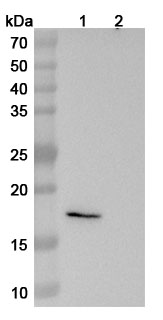
- Western blotting: The Anti-Human APOH Monoclonal Antibody (1A462) can be used in Western blotting to detect the presence of APOH protein in a sample. This technique involves separating proteins based on their size and then using the antibody to specifically bind to the APOH protein, allowing for its detection.
- Immunohistochemistry (IHC): This antibody can also be used in IHC to visualize the localization and distribution of APOH protein in tissue samples. This technique involves using the antibody to bind to the APOH protein in tissue sections, which are then visualized under a microscope.
- Enzyme-linked immunosorbent assay (ELISA): The Anti-Human APOH Monoclonal Antibody (1A462) can be used in ELISA to quantify the amount of APOH protein in a sample. This technique involves using the antibody to capture the APOH protein and then detecting it using a colorimetric or fluorescent signal.
- Functional studies: By inhibiting the activity of APOH, the Anti-Human APOH Monoclonal Antibody (1A462) can be used in functional studies to investigate the role of
There are no reviews yet.