

Cart (0 Items)
Your cart is currently empty.
View ProductsImmuno-oncology antibody development
From complex oncology targets to advanced antibody formats, ProteoGenix combines fully human discovery platforms, cancer-focused libraries, AI-designed antibody candidates and wet-lab validation to help you advance therapeutic antibody programs with confidence.
Neoantigens • Immune checkpoints • pMHC
Cancer phage display • Single B cell • De novo generation • Hybridoma
CAR-T • Bispecifics • ADCs • VHHs
ProteoGenix supports immuno-oncology antibody programs across the full early development path. Our integrated approach uses AI as an accelerator within the antibody development workflow, helping generate and prioritize candidate sequences faster before confirming their potential through in-house wet-lab validation. By combining AI-powered design, experimental expertise, and bioproduction capabilities under one roof, we accelerate candidate exploration, reduce development timelines, and limit reproducibility issues linked to multi-vendor handoffs.
Complex immuno-oncology target expertise
ProteoGenix designs tailored strategies to improve the chances of identifying relevant binders against the difficult targets, including programs aiming to access intracellular tumor antigens through peptide-MHC recognition.
Access intracellular tumor targets through neoantigen-derived peptide-MHC antibody discovery, with at least 3 unique binders guaranteed and dedicated support with Mhc-peptide complex antibody service, TCR-like phage display and neopeptide synthesis.
Support next-generation immuno-oncology programs with functional checkpoint antibodies generated against targets in native membrane conformation, supported by precise AI-powered epitope mapping.
ProteoGenix offers multiple complementary discovery routes, so the strategy always fits your target, timeline, and downstream application rather than the other way around.
AI-guided antibody design that generates and prioritizes candidate sequences in silico before wet-lab validation. Expands the sequence space and accelerates discovery against challenging targets.
In vitro selection from large libraries, including the world’s first cancer patient-derived library (86 patients, 18 indications). Generates fully human, tumor-specific antibodies against the toughest targets in just 4 weeks — no immunization needed.
→ Explore our Patient-Derived Cancer Antibody Library for Phage Display
The proven route for robust monoclonal antibodies via animal immunization. Ideal for stable, high-affinity clones and large candidate panels against well-behaved antigens.
→ Explore custom hybridoma development
Direct screening of individual B cells, preserving the natural VH/VL pairing. A fast route to rare, high-affinity, natively paired candidates with full sequence information.
→ Explore single B-cell antibody service
ProteoGenix helps you select the most appropriate formats depending on antigen type, desired format, timeline, developability constraints and downstream application.
| Format | Best fort | ProteoGenix advantage | Timeline |
|---|---|---|---|
| Bispecific antibody production service | Immune cell engagement, dual-target MOA | IgG-like & fragment formats; nanomolar leads | 4–6 weeks |
| CAR-T cell development services | Cell-surface targets, adoptive cell therapy | Up to 10 binder sequences, full IP ownership | 10 weeks |
| Single domain antibody service | Difficult epitopes, advances IO applications | 3 binders guaranteed from 1.51 × 10¹⁰ library | 7 weeks |
| Antibody drug conjugate service | Tumor internalization, payload delivery | >90% DAR homogeneity, full ADC characterization | 3 weeks |
Why ProteoGenix?
Immuno-oncology antibody programs are rarely straightforward. Targets can be poorly immunogenic, intracellular, conformational, membrane-bound, rare or highly similar to healthy tissue antigens.
ProteoGenix brings together antigen design, custom antibody discovery, sequencing, engineering, AI-assisted optimization, wet-lab validation and recombinant production to help you move from complex cancer biology to stronger antibody candidates.
More than two decades of scientific expertise in antibody discovery, engineering and production.
A proven track record supporting therapeutic antibody programs from early discovery to development.
Strong antibody assets generated for programs requiring sequence ownership and IP-driven development.
CAR-T Cell development
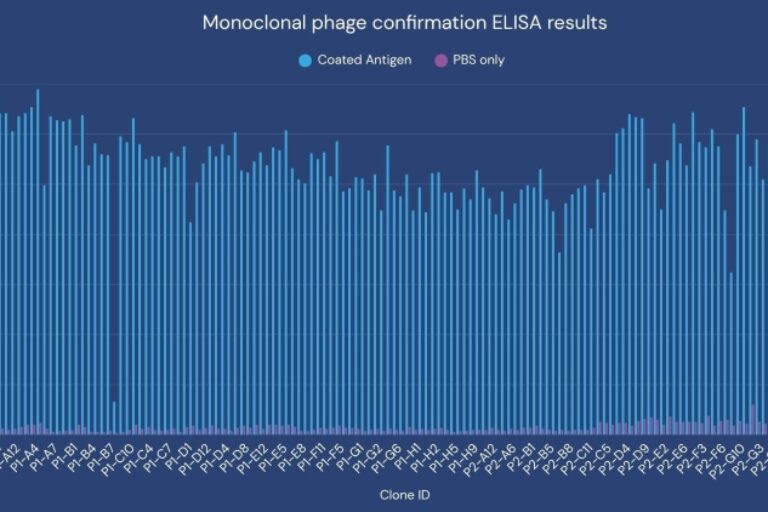
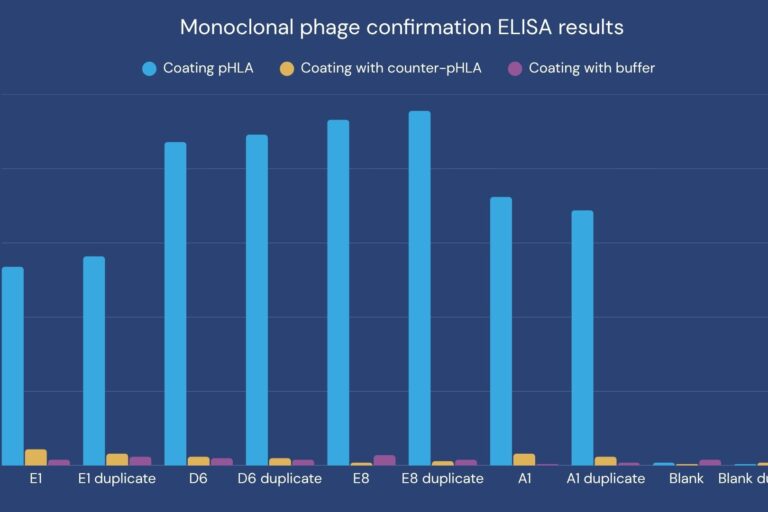
Screening 480 phage binders yielded 130 distinct antibody sequences, all re-validated by monoclonal phage ELISA, delivered to the client in just 3 weeks.
Single domain antibody production
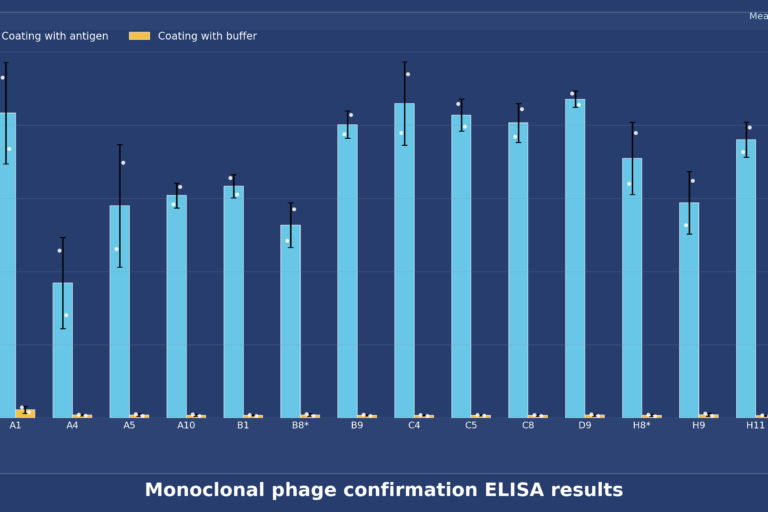
ProteoGenix delivered 14 unique PD-1-binding VHH sequences (versus the 3 guaranteed) in 3 weeks, of which 10 bound PD-1-expressing cells and 5 showed blocking activity.
Bispecific antibody development
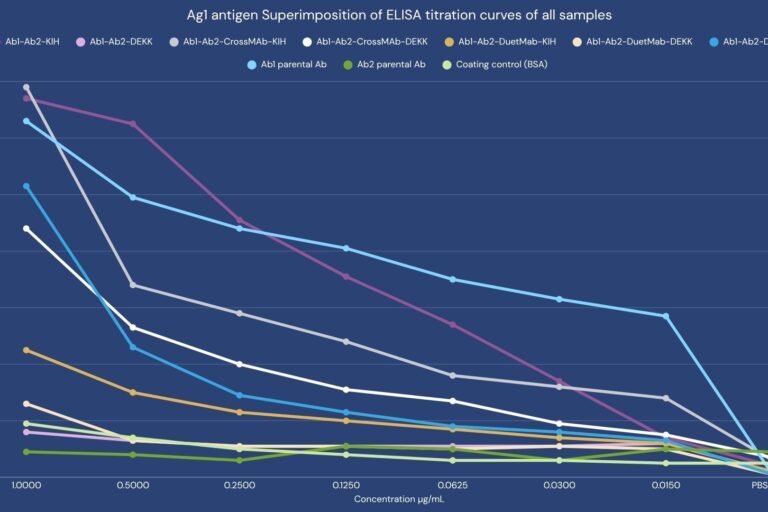
Seven bispecific formats were designed and expressed against two prostate cancer targets, with three top candidates retaining nanomolar dual-antigen affinity — the best reaching 3.2×10⁻¹⁰ M.
Anti-drug conjugate antibody
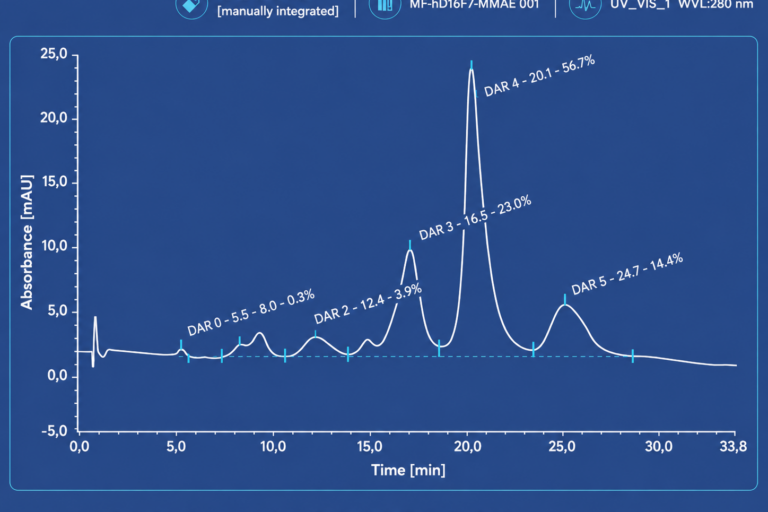
ProteoGenix delivered over 6 mg of a site-specifically conjugated human IgG1–Vc-MMAE ADC with an average DAR of 3.8 and 92.2% monomeric purity, giving the academic team a fully characterized batch for preclinical proof-of-concept.
Complex targets
By screening three proprietary libraries (>2×10¹¹ clones) in 3 weeks, ProteoGenix identified 4 highly selective anti-pHLA antibodies, one of which was engineered into a CAR-T construct validated in preclinical assays.
Is your anticancer therapeutic antibody ready for the next step? Download our dynamic and interactive checklist to thoroughly assess your antibody’s readiness across general criteria and specialized formats. Download now
Upcoming webinar: Join us this September for an upcoming webinar exploring key advances and applications in immuno-oncology. See our webinars
Whether you are targeting a membrane protein, a peptide-MHC complex, a neoantigen or a tumor-associated antigen, ProteoGenix can help you select the right discovery strategy, engineer the right therapeutic format and move your candidate toward production readiness.