Human ROR2/NTRKR2 HEK293T Stable Cell Line: A Versatile Tool for Studying Receptor Function and Therapeutic Targeting
Introduction
The ROR2 (receptor tyrosine kinase-like orphan receptor 2) and NTRKR2 (neurotrophic tyrosine kinase, receptor, type 2) proteins are members of the receptor tyrosine kinase family, involved in various cellular processes such as cell proliferation, differentiation, and migration. Dysregulation of ROR2 and NTRKR2 has been linked to various diseases, making them potential therapeutic targets. To facilitate the study of these receptors, Human ROR2/NTRKR2 HEK293T stable cell line has been developed. In this article, we will discuss the structure, activity, and potential applications of this stable cell line.
Structure of Human ROR2/NTRKR2 HEK293T Stable Cell Line
The Human ROR2/NTRKR2 HEK293T stable cell line is derived from human embryonic kidney (HEK) 293T cells, a commonly used cell line in research. These cells have been stably transfected with both ROR2 and NTRKR2 genes, ensuring their stable expression. The stable cell line is maintained in a selective medium containing G418, which allows for the selection and maintenance of cells with integrated ROR2 and NTRKR2 genes. The cells are also routinely tested for mycoplasma contamination to ensure their purity.
Activity of Human ROR2/NTRKR2 HEK293T Stable Cell Line
The stable expression of ROR2 and NTRKR2 in HEK293T cells allows for the study of their activity in a controlled and consistent environment. These receptors are known to activate various signaling pathways, including the Wnt/β-catenin and MAPK/ERK pathways, upon binding to their ligands. The Human ROR2/NTRKR2 HEK293T stable cell line can be used to study the downstream effects of receptor activation, such as changes in gene expression, cell proliferation, and migration. Additionally, the stable cell line can be used to investigate the binding affinity and specificity of potential ligands for ROR2 and NTRKR2.
Applications of Human ROR2/NTRKR2 HEK293T Stable Cell Line
The Human ROR2/NTRKR2 HEK293T stable cell line has a wide range of applications in both basic and translational research. One of the key applications is the study of ROR2 and NTRKR2 function in various cellular processes. For example, researchers can use this stable cell line to investigate the role of these receptors in cancer cell proliferation and migration, as both ROR2 and NTRKR2 have been implicated in tumorigenesis. Additionally, the stable cell line can be used to identify potential therapeutic targets for diseases associated with dysregulated ROR2 and NTRKR2 activity.
Another potential application of the Human ROR2/NTRKR2 HEK293T stable cell line is in drug discovery and development. The stable cell line can be used to screen for compounds that can modulate ROR2 and NTRKR2 activity, which can then be further developed as potential therapeutics for diseases such as cancer and osteoarthritis. The stable cell line can also be used in preclinical studies to evaluate the efficacy and safety of these potential therapeutics.
Flow Cytometry Analysis of Human ROR2/NTRKR2 HEK293T Stable Cell Line
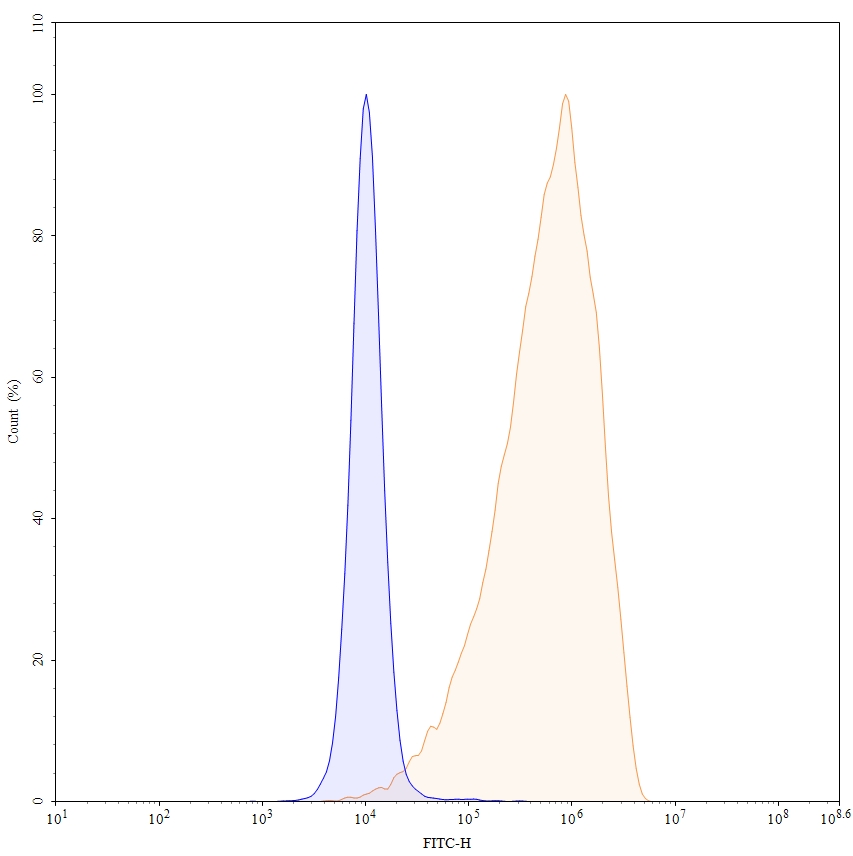
Flow cytometry is a powerful technique used to analyze the expression of cell surface markers and intracellular proteins. The Human ROR2/NTRKR2 HEK293T stable cell line can be analyzed using flow cytometry to confirm the stable expression of ROR2 and NTRKR2. This technique can also be used to quantify the expression levels of these receptors, providing valuable information for downstream experiments.

There are no reviews yet.