Vatreptacog alfa Biosimilar – Anti-FVIIa Mutant Version (FVIIaDVQ) fusion protein – Research Grade: A Novel Therapeutic Antibody Targeting Coagulation Factor VIIa
Introduction
Vatreptacog alfa Biosimilar – Anti-FVIIa Mutant Version (FVIIaDVQ) fusion protein is a novel therapeutic antibody that targets coagulation Factor VIIa (FVIIa). This fusion protein is a biosimilar of Vatreptacog alfa, a recombinant activated FVIIa (rFVIIa) used for the treatment of bleeding disorders. However, FVIIaDVQ has been engineered to have improved structural and functional properties, making it a promising candidate for the treatment of various bleeding disorders.
Structure of FVIIaDVQ
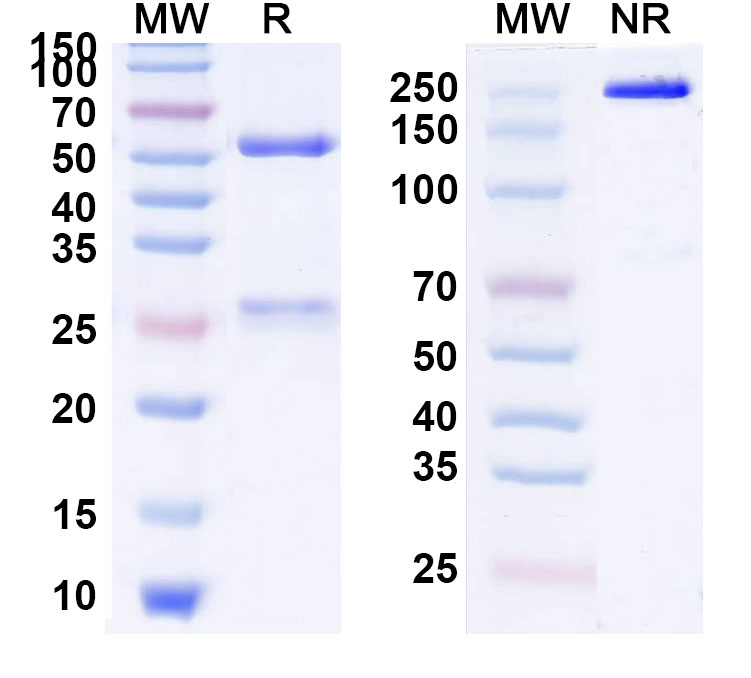
FVIIaDVQ is a fusion protein composed of two parts: an anti-FVIIa antibody and a mutant version of FVIIa. The anti-FVIIa antibody is a monoclonal antibody that specifically binds to FVIIa, inhibiting its activity. The mutant version of FVIIa, known as DVQ, has a triple mutation (D295V, Q296K, and E298Q) in its catalytic domain, which enhances its enzymatic activity and stability.
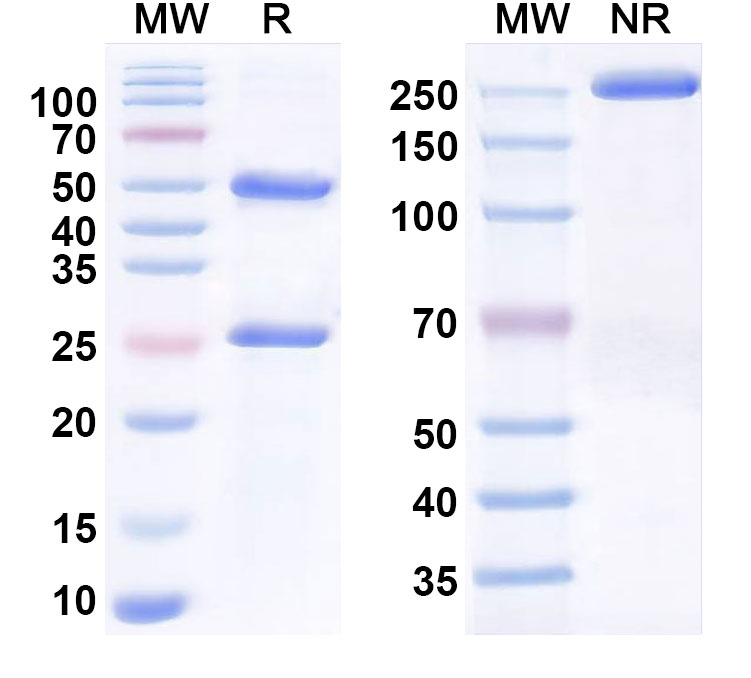
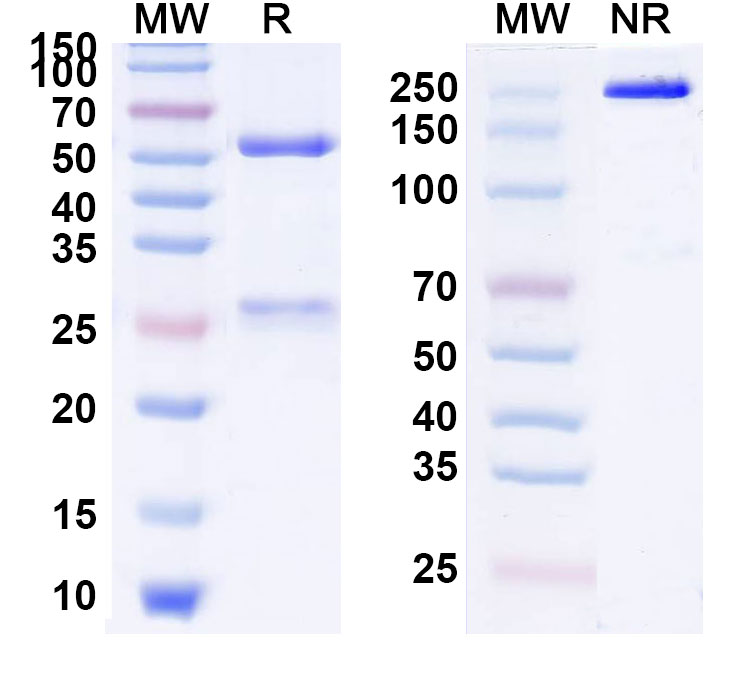
The anti-FVIIa antibody is composed of two heavy chains and two light chains, linked together by disulfide bonds. The heavy chains contain the antigen-binding domain, while the light chains contain the constant domain. The antibody is designed to have a high affinity for FVIIa, allowing for efficient inhibition of its activity.
On the other hand, the DVQ mutant has a similar structure to wild-type FVIIa, with a Gla domain, two epidermal growth factor (EGF)-like domains, and a protease domain. However, the triple mutation in the protease domain results in a more stable and active form of FVIIa, making it a more potent therapeutic agent.
Activity of FVIIaDVQ
FVIIaDVQ has a dual mechanism of action, targeting both the activity and stability of FVIIa. The anti-FVIIa antibody binds to the active site of FVIIa, preventing it from binding to its substrate and inhibiting its enzymatic activity. This results in a decrease in thrombin generation, which is crucial for blood clotting.
Moreover, the DVQ mutant enhances the stability and activity of FVIIa. The triple mutation in the protease domain increases the half-life of FVIIa, allowing it to circulate in the bloodstream for a longer period. This results in a sustained inhibition of thrombin generation and a prolonged hemostatic effect.
Application of FVIIaDVQ
FVIIaDVQ has shown promising results in pre-clinical studies, demonstrating its potential as a therapeutic agent for various bleeding disorders. It has been shown to be effective in hemophilia A and B, acquired hemophilia, and other bleeding disorders associated with FVIIa deficiency.
In addition, FVIIaDVQ has also shown potential in the treatment of conditions such as liver cirrhosis and disseminated intravascular coagulation (DIC), where there is an imbalance in the coagulation system. The dual mechanism of action of FVIIaDVQ makes it a versatile therapeutic agent for these conditions.
Conclusion
In conclusion, Vatreptacog alfa Biosimilar – Anti-FVIIa Mutant Version (FVIIaDVQ) fusion protein is a novel therapeutic antibody targeting coagulation Factor VIIa. Its unique structure, dual mechanism of action, and promising results in pre-clinical studies make it a potential therapeutic option for various bleeding disorders and other conditions associated with coagulation abnormalities. Further clinical studies are needed to fully assess the efficacy and safety of

There are no reviews yet.