Get 25% off your first bioreagent online order — use code: PROTEOSHOP25

Biomarker proteins

A biomarker is defined as a biological molecule found in blood, other body fluids, or tissues that is a sign of a normal or abnormal process. Biomarkers may be an enzyme or receptor, hormones, antibodies, peptides and even nucleic acids such a microRNA or other non‐coding RNA. A biomarker can also be a collection of alterations, such as gene expression, proteomic, and metabolomic signatures. Depending on the type, the biomarkers can be detected in the circulation (whole blood, plasma or serum) or excretions or secretions (stool, urine, sputum, or nipple discharge). Certain biomarkers may be genetically inherited.

In oncology, cancer biomarkers enable scientists to identify early events such as genetic or epigenetic changes or protein alterations. These alterations distinguish a cancer cell from a normal cell and thus help with predicting the pathological behavior of the tumor. The alterations can be due to several factors, including post‐translational modifications, transcriptional changes. Biomarkers can be used for the assessment in multiple clinical settings, including estimating risk of disease, screening for occult primary cancers, distinguishing benign from malignant findings or one type of malignancy from another, determining prognosis and prediction in cancer diagnosis. Cancer biomarkers may also help monitor the status of the disease, either to detect recurrence or determine response or progression to therapy.

Immunohistochemistry (IHC) is a hugely popular tool in detecting biomarkers and remains the gold standard in clinical cancer diagnostics. IHC is an umbrella term that encompasses many methods that use specific antibodies to identify tissue constituents that act as antigens. The antigen-antibody bonding can be visualized through staining. Biomarkers act as antigens which, with the correct antibody, allows their identification and investigation. These tests are run quickly, with ease, and at low cost compared to other diagnostic methods.
Using this technique to detect biomarkers, researchers can identify the histogenesis of tumors, stage tumors, predict tumor prognosis, and predict and monitor therapeutic response. Knowing the utilities and pitfalls of each tumor-associated biomarker, it is essential to avoid potential diagnostic error, as no cancer-specific biomarker exists.

The first essential step in detecting a biomarker is to choose a sensitive, specific and consistent IHC antibody. Antibody validation is key to ensuring antibody specificity and reproducibility.
ProteoGenix offers a wide range of biomarkers including a number of the most common cancer biomarker types. ProteoGenix also provides a wide selection of the most highly recommended antibodies for use in IHC as well as:

  • International and quick delivery
  • A wide range of products
  • Free shipping in UE for orders >500€
4,789 products
  • Human CD140b/PDGFRB Recombinant Protein, C-His

    Human CD140b/PDGFRB Recombinant Protein, C-His

    • ARO-P21192
    Host species:
    Mammalian cells
    Origin species:
    Human
    Brand:
    ProteoGenix
    Size:
    100ug, 1MG, 50ug
  • Human CD146/MCAM Recombinant Protein, C-Fc

    Human CD146/MCAM Recombinant Protein, C-Fc

    • ARO-P20963
    Host species:
    Mammalian cells
    Origin species:
    Human
    Brand:
    ProteoGenix
    Size:
    100ug, 1MG, 50ug
  • Human CD153/TNFSF8 Recombinant Protein, N-Fc

    Human CD153/TNFSF8 Recombinant Protein, N-Fc

    • ARO-P20958
    Host species:
    Mammalian cells
    Origin species:
    Human
    Brand:
    ProteoGenix
    Size:
    100ug, 1MG, 50ug
  • Human CD156a/ADAM8 Recombinant Protein, C-His

    Human CD156a/ADAM8 Recombinant Protein, C-His

    • ARO-P21058
    Host species:
    Mammalian cells
    Origin species:
    Human
    Brand:
    ProteoGenix
    Size:
    100ug, 1MG, 50ug
  • Human CD158b2/KIR2DL3 Recombinant Protein, C-His

    Human CD158b2/KIR2DL3 Recombinant Protein, C-His

    • ARO-P18221
    Host species:
    Mammalian cells
    Origin species:
    Human
    Brand:
    ProteoGenix
    Size:
    100ug, 1MG, 50ug
  • Human CD158d/KIR2DL4 Recombinant Protein, N-His

    Human CD158d/KIR2DL4 Recombinant Protein, N-His

    • ARO-P20765
    Host species:
    Escherichia coli (E.coli)
    Origin species:
    Human
    Brand:
    ProteoGenix
    Size:
    100ug, 1MG, 50ug
  • Human CD158e/KIR3DL1 Recombinant Protein, N-His

    Human CD158e/KIR3DL1 Recombinant Protein, N-His

    • ARO-P21015
    Host species:
    Escherichia coli (E.coli)
    Origin species:
    Human
    Brand:
    ProteoGenix
    Size:
    100ug, 1MG, 50ug
  • Human CD158f Recombinant Protein, N-His

    Human CD158f Recombinant Protein, N-His

    • ARO-P19589
    Host species:
    Escherichia coli (E.coli)
    Origin species:
    Human
    Brand:
    ProteoGenix
    Size:
    100ug, 1MG, 50ug
  • Human CD158g Recombinant Protein, C-Fc

    Human CD158g Recombinant Protein, C-Fc

    • ARO-P19590
    Host species:
    Mammalian cells
    Origin species:
    Human
    Brand:
    ProteoGenix
    Size:
    100ug, 1MG, 50ug
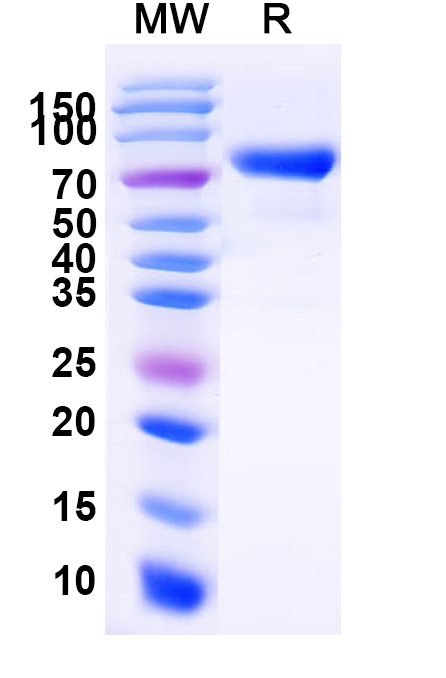
  • SDS-PAGE for Human CD158i/KIR2DS4 Recombinant Protein, C-Fc

    Human CD158i/KIR2DS4 Recombinant Protein, C-Fc

    • ARO-P18220
    Host species:
    Mammalian cells
    Origin species:
    Human
    Brand:
    ProteoGenix
    Size:
    100ug, 1MG, 50ug
  • Human CD159c recombinant protein

    Human CD159c recombinant protein

    • PX-P6372
    Host species:
    Mammalian cells
    Origin species:
    Human
    Brand:
    ProteoGenix
    Size:
    100ug, 1MG, 50ug
Business people shaking hands in the office. Group of business persons in business meeting. Two entrepreneurs on meeting in board room. Corporate business team on meeting in modern office. Female manager discussing new project with her colleagues. Company owner on a meeting with her employee in her office.

Need a quote or more information? Contact us!

    Cart (0 Items)

    Your cart is currently empty.

    View Products