The Anti-L1 Polyclonal Antibody is a highly specific and sensitive tool for studying L1 cell adhesion molecule (L1CAM) in various biological systems. This antibody targets the extracellular domain of L1CAM, a transmembrane protein that plays a critical role in cell adhesion, migration, and signaling.
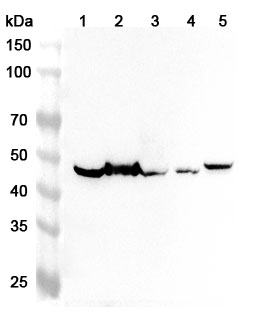
This polyclonal antibody is produced through immunization with purified recombinant L1CAM protein, ensuring high specificity and low background in a variety of applications. It has been extensively validated for use in Western blotting, immunofluorescence, and immunohistochemistry, making it a versatile tool for researchers in the fields of neuroscience, developmental biology, and cancer research.
One of the main applications of the Anti-L1 Polyclonal Antibody is in the study of neuronal development and function. L1CAM is known to be involved in neural cell migration, axon guidance, and synapse formation, making it a crucial protein in the development and maintenance of the nervous system. This antibody can be used to visualize L1CAM expression and localization in different regions of the brain, as well as in neuronal cultures.
In addition to its role in the nervous system, L1CAM has also been implicated in various types of cancer, including breast, ovarian, and neuroblastoma. The Anti-L1 Polyclonal Antibody can be used to detect L1CAM expression in tumor tissues, aiding in the diagnosis and prognosis of these cancers. It can also be used in functional studies to investigate the role of L1CAM in cancer cell invasion and metastasis.
The experimental use cases for the Anti-L1 Polyclonal Antibody are numerous and diverse. It has been successfully used in a variety of cell lines, tissues, and model organisms, including mice, rats, and zebrafish. Its high sensitivity and specificity make it an ideal tool for studying L1CAM in both normal and pathological conditions.
In summary, the Anti-L1 Polyclonal Antibody is a valuable tool for researchers studying L1CAM in various biological systems. Its high specificity, versatility, and extensive validation make it a reliable choice for a wide range of applications. With this antibody, scientists can gain a deeper understanding of the biological function of L1CAM and its role in disease, ultimately leading to new insights and potential therapeutic targets. Order now and advance your research with the Anti-L1 Polyclonal Antibody.

There are no reviews yet.