Title: Introduction to Human TIGIT HEK293T Stable Cell Line
The Human TIGIT HEK293T Stable Cell Line is a valuable tool for studying the structure, activity, and potential therapeutic applications of the T-cell immunoglobulin and ITIM domain (TIGIT) protein. TIGIT is a co-inhibitory receptor expressed on various immune cells, including T cells, natural killer (NK) cells, and regulatory T cells (Tregs). It plays a crucial role in regulating immune responses and has emerged as a promising therapeutic target for various diseases, including cancer and autoimmune disorders.
Structure of Human TIGIT HEK293T Stable Cell Line
The Human TIGIT HEK293T Stable Cell Line is a genetically modified cell line that stably expresses the human TIGIT protein. The HEK293T cell line, derived from human embryonic kidney cells, is commonly used for protein expression studies due to its high transfection efficiency and ability to support stable protein expression. The stable expression of TIGIT in this cell line allows for the production of a large quantity of pure and functional TIGIT protein for further characterization and functional studies.
Activity of Human TIGIT HEK293T Stable Cell Line
The TIGIT protein is a member of the immunoglobulin superfamily and consists of an extracellular domain, a transmembrane domain, and an intracellular domain. The extracellular domain contains an immunoglobulin variable domain, which interacts with its ligands, CD155 and CD112. The intracellular domain contains an immunoreceptor tyrosine-based inhibitory motif (ITIM) and an immunoreceptor tyrosine-based switch motif (ITSM), which are responsible for the inhibitory function of TIGIT.
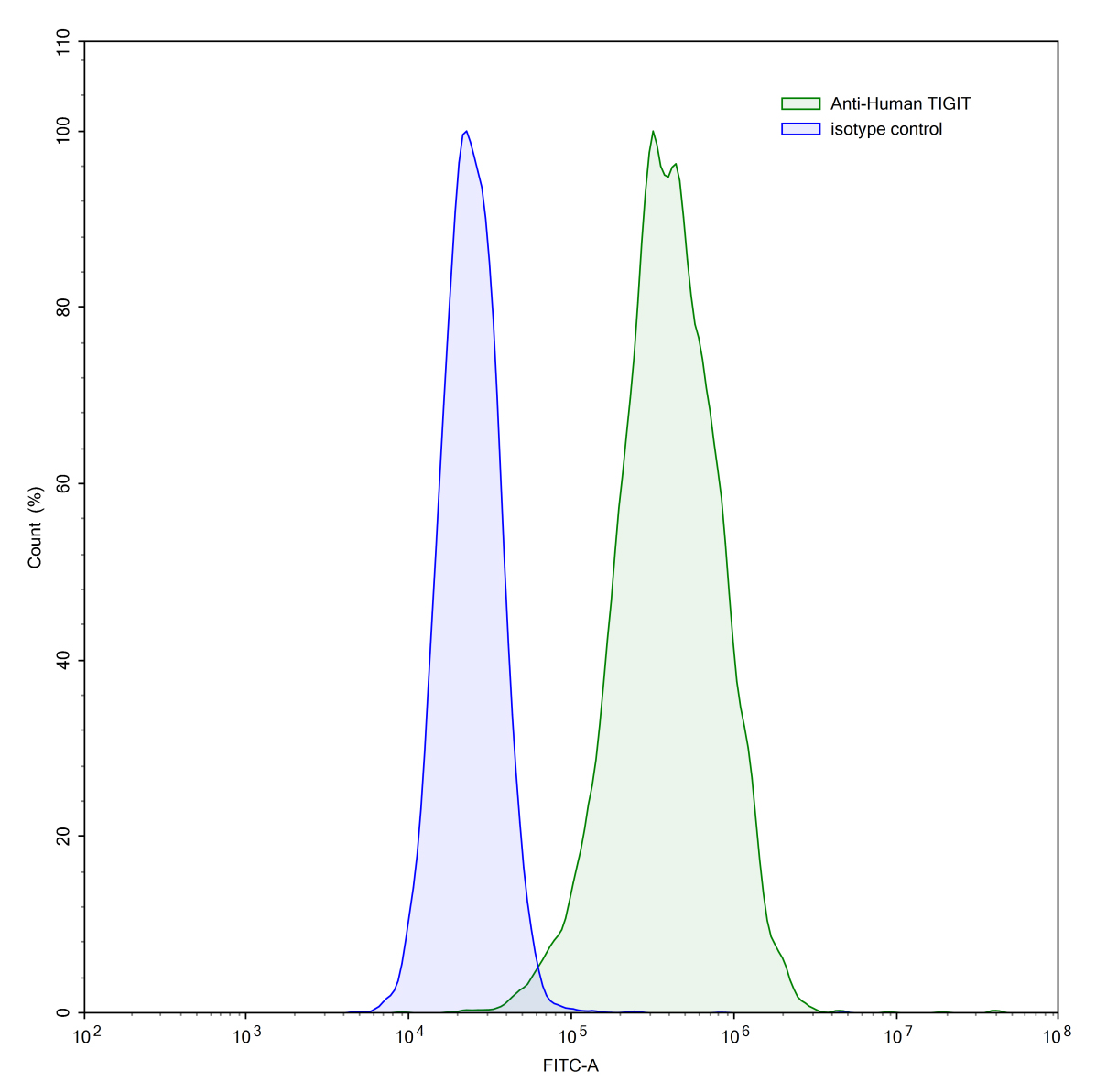
The Human TIGIT HEK293T Stable Cell Line can be used to study the binding affinity and specificity of TIGIT towards its ligands. Flow cytometry analysis using fluorescently labeled ligands can be performed to determine the binding kinetics of TIGIT. In addition, the stable cell line can also be used for functional studies, such as determining the downstream signaling pathways activated upon TIGIT ligation. This can provide valuable insights into the inhibitory mechanism of TIGIT and its role in immune regulation.
Application of Human TIGIT HEK293T Stable Cell Line
The Human TIGIT HEK293T Stable Cell Line has potential applications in both basic research and drug development. In basic research, it can be used to investigate the role of TIGIT in immune responses and its interactions with other immune receptors. It can also be used to study the effects of TIGIT on different immune cell populations, such as T cells, NK cells, and Tregs.
In drug development, the Human TIGIT HEK293T Stable Cell Line can be used for high-throughput screening of potential TIGIT inhibitors or agonists. These inhibitors can potentially be developed into therapeutics for the treatment of diseases where TIGIT is implicated, such as cancer and autoimmune disorders. The stable cell line can also be used to evaluate the efficacy of these potential therapeutics in pre-clinical studies.
In conclusion, the Human TIGIT HEK293T Stable Cell Line is a valuable tool for studying the structure, activity, and potential therapeutic applications of the TIGIT protein. Its stable expression of functional TIGIT protein allows for a better understanding of the role of TIGIT in immune regulation and its potential as a therapeutic target. With the increasing interest in TIGIT as a potential target for immunotherapy, this stable cell line is a valuable resource for researchers in the field.

There are no reviews yet.