Introduction
Recombinant proteins have become essential tools in various fields of research and medicine due to their ability to mimic natural proteins and their potential therapeutic applications. One such protein is the Recombinant Human EDNRB/ETRB Protein, which has gained significant attention in recent years. In this article, we will explore the structure, activity, and application of this protein in detail.
Structure of Recombinant Human EDNRB/ETRB Protein
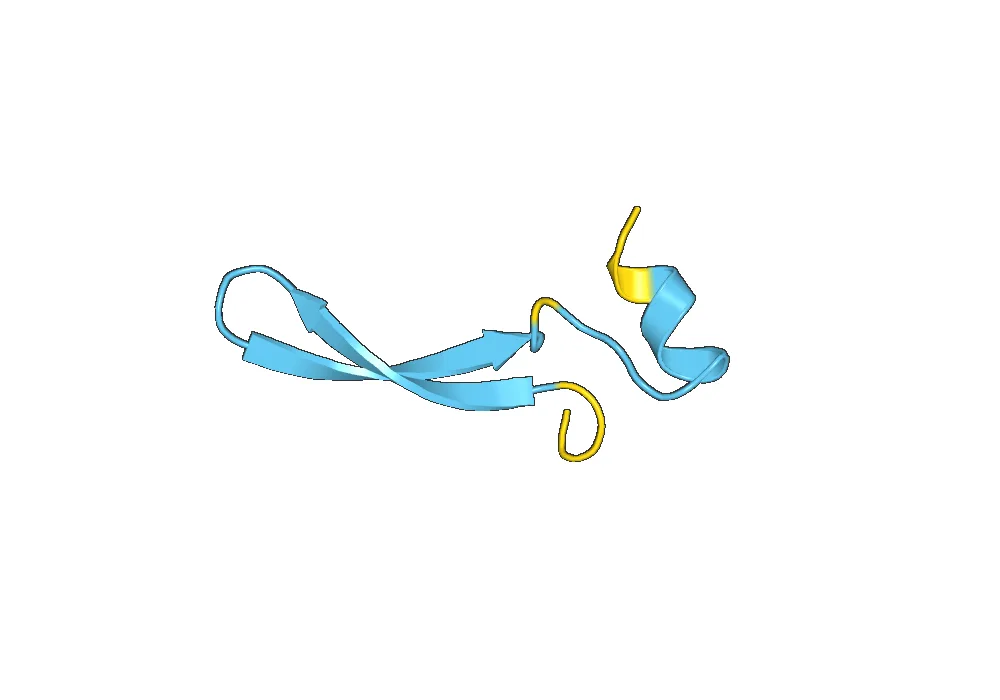
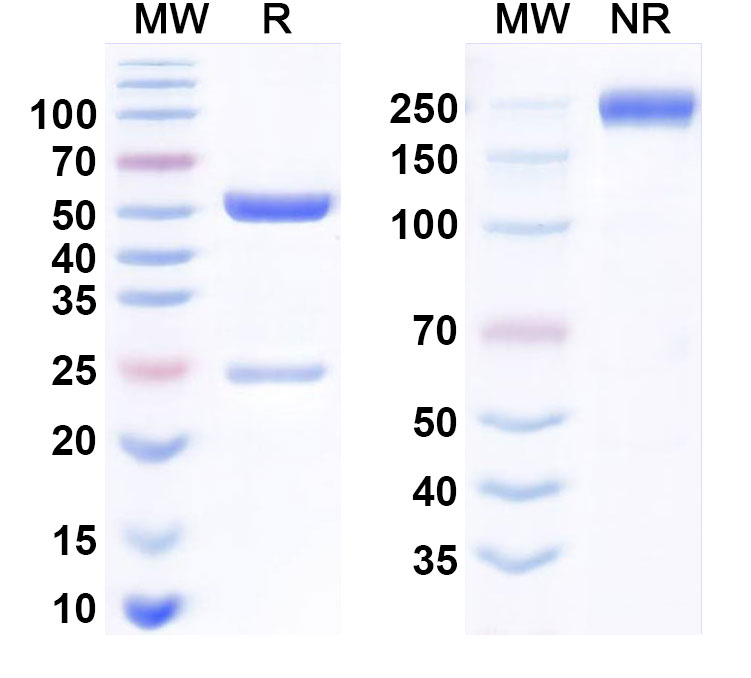
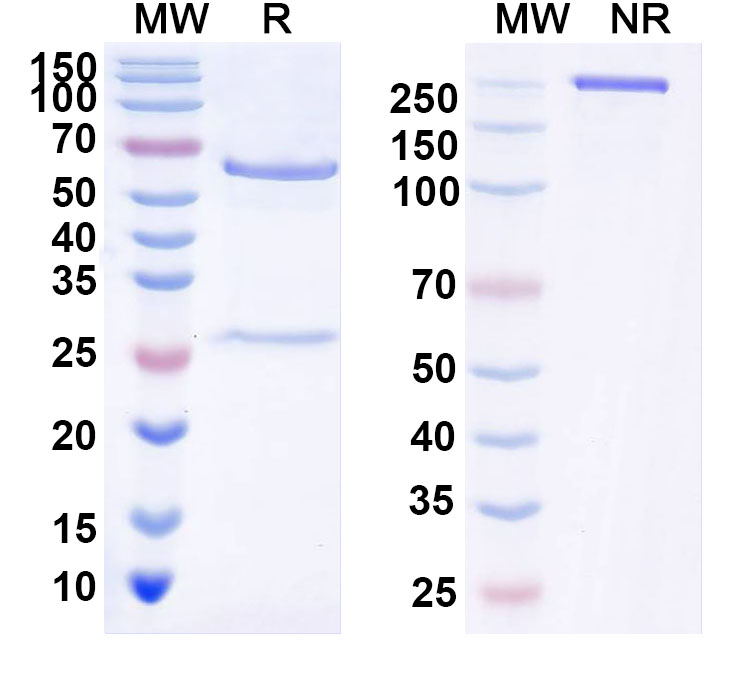
The Recombinant Human EDNRB/ETRB Protein is a 50 kDa transmembrane protein that belongs to the G-protein coupled receptor family. It is encoded by the EDNRB gene and consists of 442 amino acids. The protein contains seven transmembrane domains and has an extracellular N-terminus and an intracellular C-terminus. The extracellular domain is responsible for ligand binding, while the intracellular domain is involved in signal transduction.
Activity of Recombinant Human EDNRB/ETRB Protein
The primary function of the Recombinant Human EDNRB/ETRB Protein is to bind to the endothelin family of peptides, including endothelin-1, endothelin-2, and endothelin-3. These peptides act as potent vasoconstrictors and are involved in various physiological processes such as blood pressure regulation, smooth muscle contraction, and cell proliferation. Upon ligand binding, the Recombinant Human EDNRB/ETRB Protein activates the G-protein signaling pathway, leading to the activation of downstream effector molecules and subsequent cellular responses.
Additionally, the Recombinant Human EDNRB/ETRB Protein has been found to play a crucial role in the development and maintenance of the nervous system, particularly in the enteric nervous system. It is also involved in the regulation of melanocyte development and migration, making it a potential target for treating pigmentation disorders.
Application of Recombinant Human EDNRB/ETRB Protein
The Recombinant Human EDNRB/ETRB Protein has a wide range of applications in both research and medicine. In research, it is commonly used as an antigen in various studies investigating the endothelin signaling pathway and its role in different diseases. It is also used as a tool to study the function of the enteric nervous system and melanocyte development.
In medicine, the Recombinant Human EDNRB/ETRB Protein has shown promising results in the treatment of various diseases. One of its most significant applications is in the treatment of pulmonary arterial hypertension (PAH). Endothelin-1, the ligand for EDNRB, is known to be elevated in patients with PAH, leading to increased vasoconstriction and pulmonary artery remodeling. By blocking the activity of the Recombinant Human EDNRB/ETRB Protein, the excessive vasoconstriction can be reduced, and the progression of PAH can be slowed down.
Moreover, the Recombinant Human EDNRB/ETRB Protein has also been studied as a potential therapeutic target for various cancers, including melanoma, breast cancer, and prostate cancer. In these cancers, the overexpression of EDNRB has been linked to increased cell proliferation, migration, and invasion. By targeting the Recombinant Human EDNRB/ETRB Protein, these cancer cells can be inhibited, providing a potential treatment option.
Conclusion
The Recombinant Human EDNRB/ETRB Protein is a crucial protein involved in various physiological processes and has significant therapeutic potential. Its well-defined structure and activity make it an excellent tool for research and a promising target for treating diseases such as PAH and cancer. As research on this protein continues, we can expect to uncover more of its functions and potential applications in the future.

There are no reviews yet.