Recombinant Human EFNA3 Protein: Structure, Activity, and Applications
Introduction
Recombinant proteins have become an essential tool in the field of biotechnology, allowing for the production of large quantities of specific proteins for various research and therapeutic purposes. One such protein is the Recombinant Human EFNA3 Protein, which has gained significant interest due to its unique structure and diverse range of activities. In this article, we will explore the structure, activity, and applications of Recombinant Human EFNA3 Protein.
Structure of Recombinant Human EFNA3 Protein
The EFNA3 gene encodes for the protein Ephrin-A3, which belongs to the Eph receptor family. This protein plays a crucial role in cell-to-cell communication and is involved in various cellular processes such as cell adhesion, migration, and differentiation. Recombinant Human EFNA3 Protein is produced by cloning the EFNA3 gene into an expression vector and expressing it in a suitable host cell.
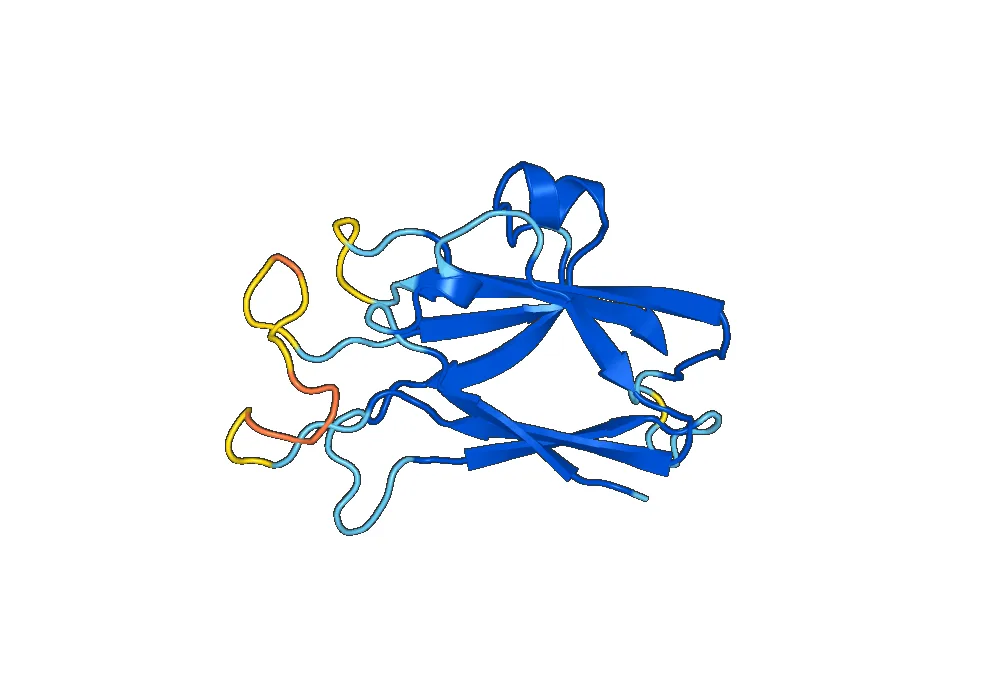
The primary structure of Recombinant Human EFNA3 Protein consists of 223 amino acids, with a predicted molecular weight of approximately 25 kDa. It contains a signal peptide at the N-terminus, which is responsible for targeting the protein to the cell membrane. The mature form of the protein consists of two domains, an extracellular domain, and a cytoplasmic domain. The extracellular domain is further divided into a receptor-binding domain and a spacer region.
Activity of Recombinant Human EFNA3 Protein
Recombinant Human EFNA3 Protein acts as a ligand for the Eph receptor family, specifically EphA4 and EphA5. Upon binding, it triggers a signaling cascade that regulates various cellular processes. One of the key activities of EFNA3 is its role in axon guidance during neural development. It promotes the growth and guidance of axons by interacting with Eph receptors on the surface of neurons.
In addition to its role in axon guidance, Recombinant Human EFNA3 Protein also plays a crucial role in cell adhesion. It mediates cell-to-cell interactions by binding to Eph receptors on adjacent cells, leading to the formation of stable cell contacts. This activity is essential for maintaining tissue integrity and regulating cell migration.
Furthermore, Recombinant Human EFNA3 Protein has been shown to have anti-tumor activity. It inhibits the growth and migration of cancer cells by binding to Eph receptors on the surface of tumor cells and inducing cell death. This makes it a potential therapeutic target for the treatment of various cancers.
Applications of Recombinant Human EFNA3 Protein
The unique structure and diverse range of activities of Recombinant Human EFNA3 Protein make it a valuable tool in various research and therapeutic applications. One of the primary applications of this protein is in the study of neural development. Its role in axon guidance and cell adhesion makes it an essential protein for understanding the complex processes involved in neural development.
In addition to its role in neural development, Recombinant Human EFNA3 Protein has potential therapeutic applications. Its anti-tumor activity makes it a potential target for the development of cancer treatments. It can also be used in tissue engineering to promote cell adhesion and tissue formation.
Moreover, Recombinant Human EFNA3 Protein has been used in drug discovery studies. Its interaction with Eph receptors makes it a potential target for the development of drugs that can modulate Eph receptor signaling. This could lead to the development of novel treatments for various diseases.
Conclusion
In conclusion, Recombinant Human EFNA3 Protein is a versatile protein with a unique structure and diverse range of activities. Its role in axon guidance, cell adhesion, and anti-tumor activity make it a valuable tool for research and potential therapeutic applications. Further studies on this protein could lead to a better understanding of its functions and potential for the development of novel treatments.


There are no reviews yet.