Title: Introduction to Recombinant Human USP21 Protein
Recombinant Human USP21 Protein, also known as ubiquitin-specific protease 21, is a highly conserved enzyme that plays a crucial role in the regulation of various cellular processes. This protein is produced through recombinant DNA technology, allowing for large-scale production and purification for use in scientific research and biotechnology applications.
Structure of Recombinant Human USP21 Protein
The primary structure of Recombinant Human USP21 Protein consists of 524 amino acids, with a molecular weight of approximately 61 kDa. It contains a catalytic core domain, which is responsible for its enzymatic activity, and several other domains that are important for its function, including a zinc finger domain and a ubiquitin-like domain.
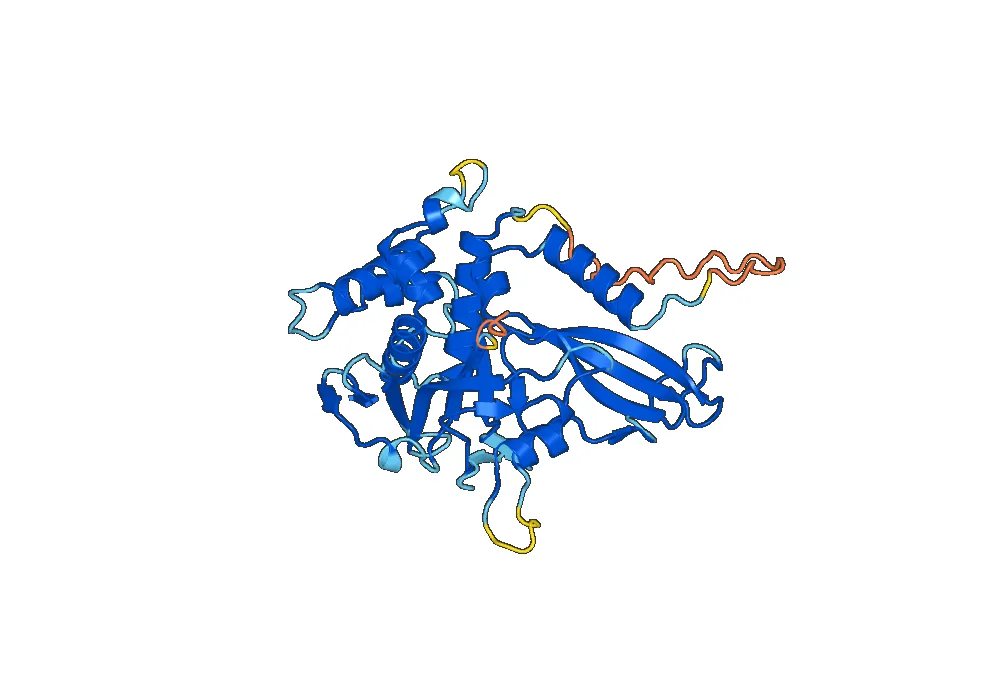
The tertiary structure of Recombinant Human USP21 Protein has been extensively studied through X-ray crystallography and nuclear magnetic resonance (NMR) spectroscopy. These studies have revealed that the protein adopts a compact globular structure, with the catalytic core domain located at the center. The zinc finger domain and the ubiquitin-like domain are located on the surface of the protein, allowing for interactions with other molecules.
Activity of Recombinant Human USP21 Protein
Recombinant Human USP21 Protein is a deubiquitinating enzyme, meaning it has the ability to remove ubiquitin molecules from other proteins. Ubiquitin is a small protein that is attached to other proteins, marking them for degradation or regulating their activity. By removing ubiquitin from target proteins, Recombinant Human USP21 Protein plays a crucial role in the regulation of various cellular processes, including protein degradation, DNA repair, and cell cycle progression.
In addition to its deubiquitinating activity, Recombinant Human USP21 Protein has also been shown to have E3 ligase activity, meaning it can facilitate the transfer of ubiquitin from an E2 enzyme to a target protein. This dual activity of Recombinant Human USP21 Protein allows for complex regulation of cellular processes, making it an important player in maintaining cellular homeostasis.
Applications of Recombinant Human USP21 Protein
The unique structure and activity of Recombinant Human USP21 Protein make it a valuable tool in scientific research and biotechnology applications. One of the main applications of this protein is in the study of ubiquitin-mediated signaling pathways. By modulating the activity of Recombinant Human USP21 Protein, researchers can gain insight into the role of ubiquitin in various cellular processes and diseases.
Recombinant Human USP21 Protein is also used in drug discovery and development, particularly in the field of cancer research. Dysregulation of ubiquitin-mediated signaling pathways has been implicated in various types of cancer, and Recombinant Human USP21 Protein can be used to study these pathways and identify potential targets for cancer therapy.
Furthermore, Recombinant Human USP21 Protein has potential therapeutic applications in the treatment of neurodegenerative diseases, as it has been shown to play a role in the clearance of misfolded proteins implicated in these diseases.
Conclusion
In summary, Recombinant Human USP21 Protein is a highly conserved enzyme with a crucial role in the regulation of various cellular processes. Its unique structure and activity make it a valuable tool in scientific research and biotechnology applications, particularly in the study of ubiquitin-mediated signaling pathways and potential therapeutic interventions. With ongoing research and advancements in recombinant protein production, the potential of Recombinant Human USP21 Protein in various fields continues to expand.


There are no reviews yet.