Introduction
The Influenza A virus is a highly infectious respiratory virus that causes seasonal flu outbreaks and occasional pandemics. The virus has a segmented negative-sense RNA genome and contains several structural and non-structural proteins. One of the key structural proteins of the virus is the nucleoprotein (NP), which plays a crucial role in viral replication and pathogenesis. In recent years, recombinant NP protein has emerged as a promising antigen for the development of universal influenza vaccines and diagnostic assays. In this article, we will discuss the structure, activity, and potential applications of recombinant Influenza A virus NP protein.
Structure of Recombinant Influenza A virus NP protein
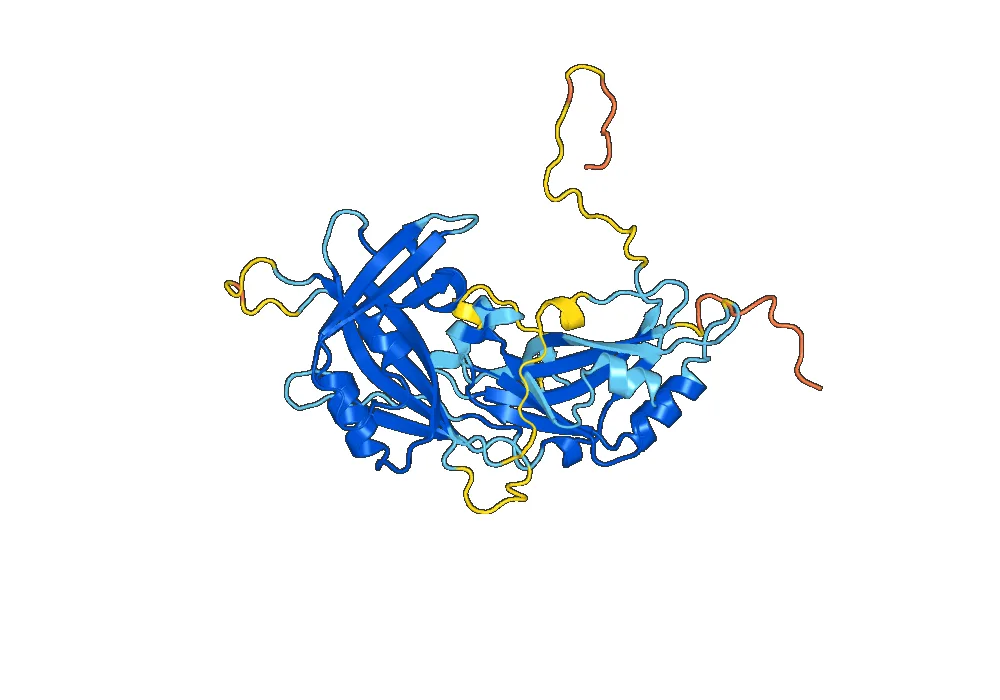
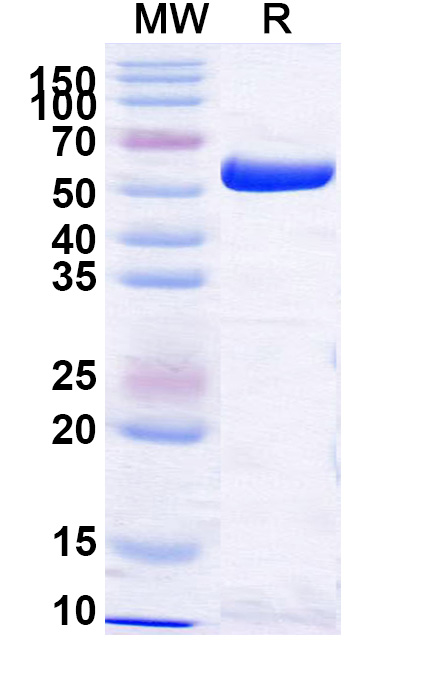
The NP protein of Influenza A virus is a highly conserved protein that forms the backbone of the viral ribonucleoprotein (RNP) complex. It is composed of a single polypeptide chain of approximately 56 kDa and contains 498 amino acids. The NP protein has a globular structure with two distinct domains: an N-terminal domain (NTD) and a C-terminal domain (CTD). The NTD is responsible for binding to viral RNA and forming the RNP complex, while the CTD is involved in protein-protein interactions and oligomerization.
Recombinant Influenza A virus NP protein is produced through genetic engineering techniques, where the gene encoding the protein is cloned and expressed in a suitable host cell. The resulting protein is identical to the native NP protein in terms of amino acid sequence and structure.
Activity of Recombinant Influenza A virus NP protein
The NP protein is essential for the replication and transcription of Influenza A virus. It binds to the viral RNA and forms the RNP complex, which serves as the template for viral RNA synthesis. The NP protein also plays a role in viral assembly and budding by interacting with other viral proteins, such as the matrix protein M1.
Recombinant Influenza A virus NP protein has been shown to retain its functional activity, including RNA-binding and oligomerization, making it a suitable antigen for various applications.
Applications of Recombinant Influenza A virus NP protein
1. Universal influenza vaccine development
The NP protein is highly conserved among different strains of Influenza A virus, making it an attractive target for the development of a universal influenza vaccine. Recombinant NP protein can be used as an antigen to induce a broad immune response against multiple strains of the virus. Several studies have shown promising results in animal models, and clinical trials are currently underway to evaluate the efficacy of recombinant NP-based vaccines.
2. Diagnostic assays
Recombinant NP protein can also be used in diagnostic assays for the detection of Influenza A virus infection. The protein can be used as a capture antigen in enzyme-linked immunosorbent assays (ELISA) or lateral flow assays to detect the presence of specific antibodies against the virus. It can also be used in rapid diagnostic tests for the detection of viral RNA in patient samples.
3. Research tool
Recombinant NP protein is a valuable tool for studying the structure and function of the Influenza A virus. It can be used in various biochemical and biophysical assays to investigate the interactions between viral proteins and host factors. The protein can also be used to generate monoclonal antibodies for further characterization of the virus.
Conclusion
In summary, recombinant Influenza A virus NP protein is a structurally and functionally active protein that has various potential applications in the field of


There are no reviews yet.