Introduction
Tecnemab-K-1 is a biosimilar antibody that targets CSPG4 (Chondroitin sulfate proteoglycan 4), a protein that is highly expressed in various types of cancers. This antibody has shown promising results in pre-clinical studies and is now being developed as a potential therapeutic for cancer treatment. In this article, we will discuss the structure, activity and potential applications of Tecnemab-K-1 Biosimilar – Anti-CSPG4 mAb – Research Grade.
Structure of Tecnemab-K-1
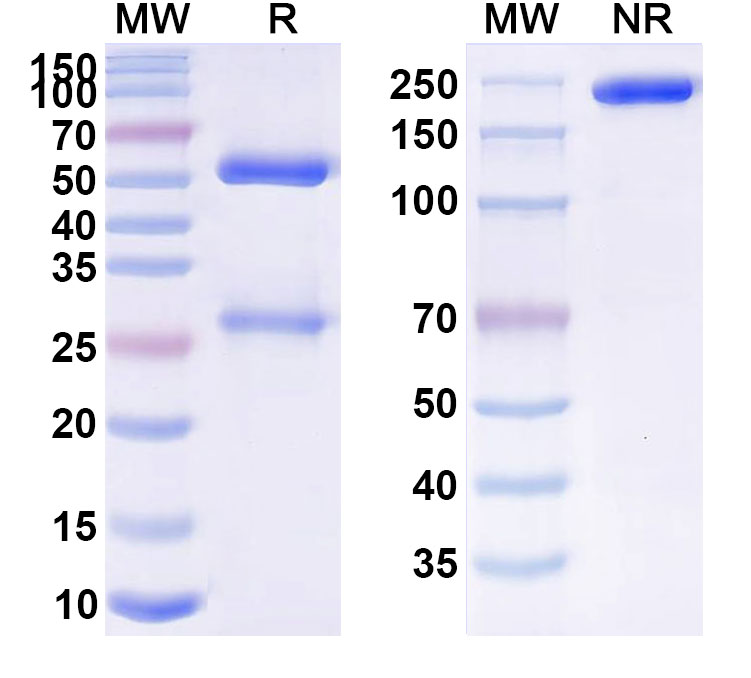
Tecnemab-K-1 is an IgG1 monoclonal antibody that is produced using recombinant DNA technology. It is a biosimilar of the original anti-CSPG4 monoclonal antibody and has been designed to have a similar structure and function. The antibody consists of two heavy chains and two light chains, connected by disulfide bonds. The heavy chains are composed of four constant domains (CH1, CH2, CH3, and CH4) and one variable domain (VH), while the light chains have one constant domain (CL) and one variable domain (VL). The variable domains are responsible for binding to the specific target, CSPG4.
Activity of Tecnemab-K-1
Tecnemab-K-1 has a high affinity for CSPG4, which is a cell surface glycoprotein that is overexpressed in various types of cancers, including melanoma, glioblastoma, and breast cancer. CSPG4 is involved in tumor growth, invasion, and metastasis, making it an attractive therapeutic target. Tecnemab-K-1 binds to CSPG4 with high specificity, inhibiting its function and leading to the inhibition of tumor growth and metastasis.
In addition to its direct anti-tumor activity, Tecnemab-K-1 also has an immune-mediated mechanism of action. It can activate the immune system, specifically natural killer (NK) cells, to target and kill CSPG4-expressing cancer cells. This dual mechanism of action makes Tecnemab-K-1 a potent therapeutic agent for cancer treatment.
Applications of Tecnemab-K-1
Tecnemab-K-1 is currently being developed as a potential therapeutic for various types of cancer. Pre-clinical studies have shown promising results, with the antibody demonstrating significant anti-tumor activity in animal models. It has also been shown to be well-tolerated and safe in these studies.
In addition to its potential as a standalone treatment, Tecnemab-K-1 can also be used in combination with other cancer therapies, such as chemotherapy and radiation therapy. Its immune-mediated mechanism of action makes it an ideal candidate for combination therapy, as it can enhance the anti-tumor effects of other treatments.
Moreover, Tecnemab-K-1 can also be used as a research tool for studying the role of CSPG4 in cancer biology. Its high specificity and affinity for CSPG4 make it a valuable tool for studying the function of this protein in cancer progression and metastasis.
Conclusion
In summary, Tecnemab-K-1 Biosimilar – Anti-CSPG4 mAb – Research Grade is a promising biosimilar antibody with high affinity and specificity for CSPG4, a protein that is overexpressed in various types of cancers. Its dual mechanism of action, targeting and activating the immune system, makes it a potent therapeutic agent for cancer treatment. With its potential as a standalone treatment and in combination with other therapies, as well as its utility as a research tool, Tecnemab-K-1 has the potential to significantly impact the field of cancer treatment.

There are no reviews yet.