General information on Vimentin protein
Vimentin protein is a type III intermediate filament (IF) protein. It is part of the cytoskeleton, along with actin-based filaments and microtubules. It is expressed in bacterial and animal cells. Vimentin is a major component in the cytoskeleton of mesenchymal cells and contributes to their cell integrity. This protein is often used as a marker for mesenchymal cells as well as for cells undergoing epithelial-to-mesenchymal transition (EMT) which can be an indicator of metastatic progression.
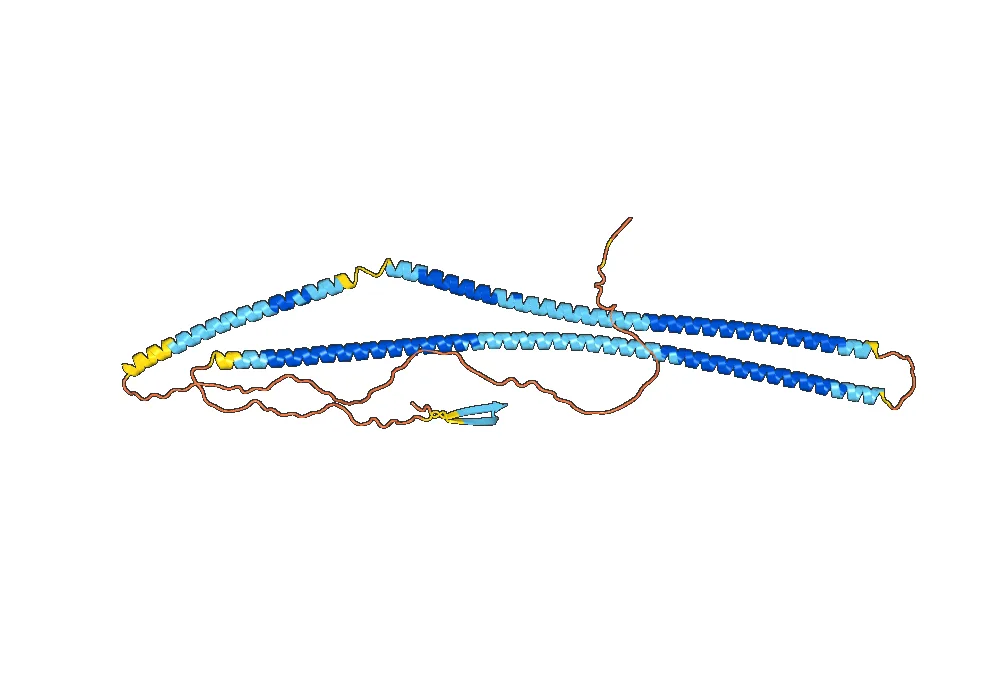
Similar to other intermediate filaments, the monomer of vimentin protein consists of a central α-helical domain, a non-helical amino head and a carboxyl terminal tail domains. Two monomers form a coiled-coil dimer. The latter is the basic subunit of vimentin protein assembly. The dynamic nature of this protein contributes significantly in cell flexibility. Vimentin protein provides cells with resilience when under mechanical stress even in the absence of actin and microtubule filaments.
Vimentin protein, as a member of cytoskeleton, is involved in anchoring and supporting the position of the organelles in the cytosol. Vimentin can be found attached to nucleus, mitochondria and endoplasmic reticulum. Besides being involved in cytoplasm integrity, vimentin protein has been shown to be involved in eliminating toxic proteins such as IPOD inclusion bodies and JUNQ in mammalian cells that undergo asymmetric division.
Another role of vimentin protein is regulating the transport of low-density lipoprotein also known as LDL-cholesterol from the lysosome to its site of esterification. The esterification step is accomplished by 2 enzymes, ACAT1 and ACAT2. If the LDL-derived cholesterol transportation is blocked, the cell would store a much lower concentration of the lipoprotein. Vimentin protein also plays a role in the formation of aggresome which refers to the process of aggregation misfolded proteins in a singular location in the cell. Vimentin protein contributes in forming a cage surrounding the aggregated protein.


There are no reviews yet.