Anti-PDIA3 Polyclonal Antibody
Biological Function:
The Anti-PDIA3 Polyclonal Antibody is a highly specific and sensitive antibody designed to target the protein PDIA3 (Protein Disulfide Isomerase A3). PDIA3 is a member of the protein disulfide isomerase family, which plays a crucial role in protein folding and quality control in the endoplasmic reticulum (ER). It is involved in the proper folding and assembly of newly synthesized proteins, ensuring their functionality and stability.
Main Applications:
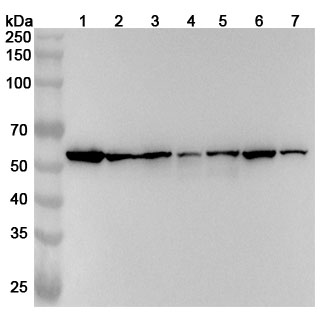
The Anti-PDIA3 Polyclonal Antibody is an essential tool for researchers studying protein folding and ER stress response. It can be used in various applications, including Western blotting, immunofluorescence, immunoprecipitation, and immunohistochemistry. This antibody is suitable for both basic research and diagnostic purposes.
Experimental Use Cases:
1. Study of ER stress response: The Anti-PDIA3 Polyclonal Antibody can be used to investigate the role of PDIA3 in the ER stress response. It can help researchers understand how PDIA3 regulates the folding and quality control of proteins under conditions of ER stress.
2. Protein folding studies: The Anti-PDIA3 Polyclonal Antibody can be used to study the role of PDIA3 in protein folding. It can help researchers elucidate the mechanisms of PDIA3 in ensuring proper protein folding and preventing misfolding and aggregation.
3. Disease research: PDIA3 has been implicated in various diseases, including cancer, neurodegenerative disorders, and diabetes. The Anti-PDIA3 Polyclonal Antibody can be used to study the expression and function of PDIA3 in disease models, providing valuable insights into its potential as a therapeutic target.
This antibody is specifically designed to target PDIA3, a protein disulfide isomerase involved in protein folding and ER stress response. It is suitable for various applications, including Western blotting, immunofluorescence, immunoprecipitation, and immunohistochemistry. Researchers can use this antibody to study the role of PDIA3 in protein folding and disease development.
Introduction:
Discover the Anti-PDIA3 Polyclonal Antibody, a highly specific and sensitive antibody designed to target the protein PDIA3. Learn more about its biological function, main applications, and experimental use cases.
Biological Function:
Learn about the crucial role of PDIA3 in protein folding and quality control in the endoplasmic reticulum. Understand how this protein disulfide isomerase ensures the proper folding and assembly of newly synthesized proteins.
Main Applications:
Explore the various applications of the Anti-PDIA3 Polyclonal Antibody, including Western blotting, immunofluorescence, immunoprecipitation, and immunohistochemistry. See how this antibody is suitable for both basic research and diagnostic purposes.
Experimental Use Cases:
Discover the potential of the Anti-PDIA3 Polyclonal Antibody in studying ER stress response, protein folding, and disease research. Explore how it can provide valuable insights into the role of PDIA3 in various diseases.
This antibody specifically targets PDIA3 and is suitable for various applications, including Western blotting, immunofluorescence, immunoprecipitation, and immunohistochemistry. Use it to study protein folding, ER stress response, and disease development.
Conclusion:
In summary, the Anti-PDIA3 Polyclonal Antibody is a valuable tool for researchers studying protein folding and ER stress response. Its high specificity and sensitivity make it an ideal choice for various applications, providing valuable insights into the role of PDIA3 in cellular processes and disease development.


There are no reviews yet.