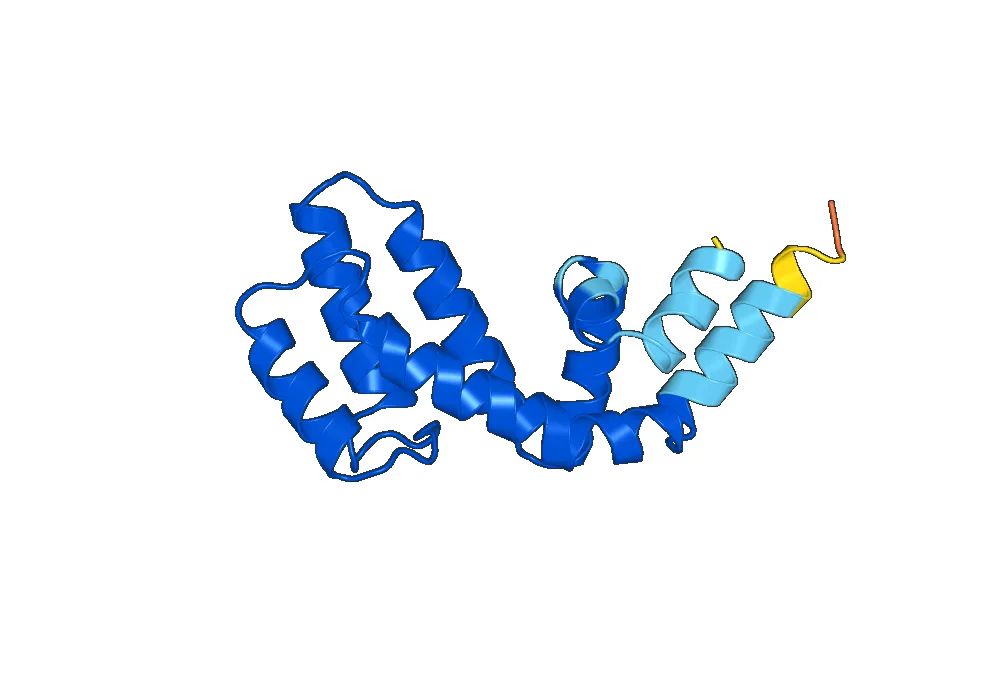
The Structure of Recombinant Human RGS17 Protein
Recombinant Human RGS17 Protein is a protein that plays a crucial role in regulating signaling pathways in the body. It is a member of the Regulator of G protein Signaling (RGS) family, which consists of over 30 proteins that are involved in the regulation of G protein-coupled receptor (GPCR) signaling. RGS17 is a small protein, consisting of 209 amino acids, with a molecular weight of approximately 24 kDa.
The primary structure of RGS17 includes a highly conserved RGS domain, which is responsible for its function as a GTPase-activating protein (GAP). This domain is composed of approximately 120 amino acids and is responsible for the interaction with G proteins. RGS17 also contains a cysteine-rich region, which is important for its membrane localization, and a C-terminal PDZ-binding domain, which is involved in protein-protein interactions.
In terms of secondary structure, RGS17 is composed of both alpha-helices and beta-sheets. The RGS domain contains six alpha-helices and six beta-sheets, while the cysteine-rich region has four alpha-helices and two beta-sheets. These structural elements are important for the proper functioning of RGS17.
The Activity of Recombinant Human RGS17 Protein
The main function of RGS17 is to regulate GPCR signaling by acting as a GAP for G alpha subunits. GPCRs are a large family of cell surface receptors that are involved in a variety of physiological processes, including vision, smell, taste, and hormone regulation. These receptors transmit signals by activating G proteins, which in turn activate downstream signaling pathways. RGS17 plays a critical role in this process by accelerating the hydrolysis of GTP to GDP, thereby inactivating G proteins and terminating the signaling cascade.
In addition to its role as a GAP, RGS17 has also been shown to interact with other proteins and modulate their activity. For example, RGS17 has been found to interact with the protein kinase C (PKC) signaling pathway, which is involved in cell survival and proliferation. RGS17 can also regulate the activity of the transcription factor NF-kappaB, which plays a key role in inflammation and immune response.
The Application of Recombinant Human RGS17 Protein
Recombinant Human RGS17 Protein has a wide range of applications in both research and therapeutic settings. As a key regulator of GPCR signaling, RGS17 is an important tool for studying the function of GPCRs and their associated signaling pathways. Recombinant RGS17 protein can be used to investigate the effects of RGS17 on specific GPCR-mediated signaling events, as well as its interactions with other proteins.
In addition, RGS17 has potential therapeutic applications. Dysregulation of GPCR signaling has been implicated in a variety of diseases, including cancer, cardiovascular disease, and neurological disorders. As RGS17 plays a critical role in regulating GPCR signaling, it has been identified as a potential target for drug development. Recombinant RGS17 protein can be used in drug screening assays to identify compounds that can modulate its activity and potentially treat diseases associated with GPCR dysfunction.
In conclusion, Recombinant Human RGS17 Protein is a crucial protein involved in the regulation of GPCR signaling. Its structure, activity, and potential applications make it a valuable tool for understanding the complex signaling pathways in the body and developing new treatments for various diseases.


There are no reviews yet.