Introduction
Recombinant Human PMFBP1 Protein, also known as Plasmodium falciparum merozoite surface protein 1-binding protein 1, is a protein that plays a crucial role in the life cycle of the malaria-causing parasite, Plasmodium falciparum. This protein is involved in the invasion of red blood cells by the parasite and has been identified as a potential target for malaria vaccine development. In this article, we will discuss the structure, activity, and potential applications of Recombinant Human PMFBP1 Protein.
Structure of Recombinant Human PMFBP1 Protein
Recombinant Human PMFBP1 Protein is a 120 kDa protein that is composed of 1081 amino acids. It contains multiple domains, including a signal peptide, a propeptide, and a C-terminal domain. The protein is glycosylated, meaning it has sugar molecules attached to it, which is important for its function.
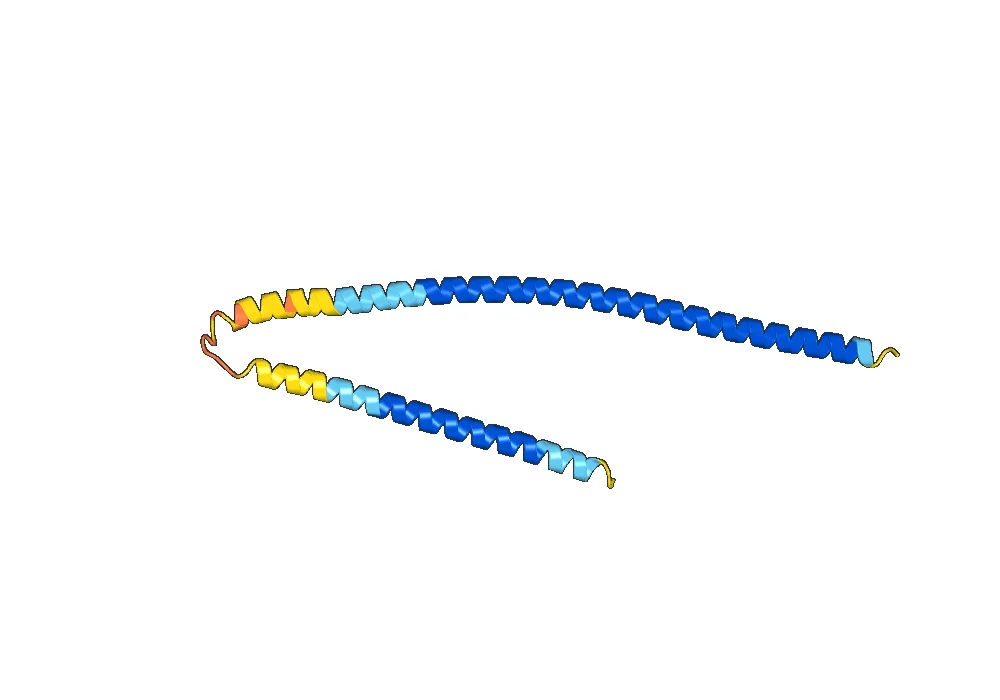
The crystal structure of Recombinant Human PMFBP1 Protein has been determined, revealing that it forms a dimer, with each monomer consisting of three domains. The N-terminal domain contains a beta-sandwich structure, while the central domain contains a beta-barrel structure. The C-terminal domain is a long, flexible loop that is important for the interaction of the protein with its binding partner, Plasmodium falciparum merozoite surface protein 1 (MSP1).
Activity of Recombinant Human PMFBP1 Protein
Recombinant Human PMFBP1 Protein plays a crucial role in the invasion of red blood cells by Plasmodium falciparum. It binds to MSP1, which is present on the surface of the parasite, and facilitates the attachment of the parasite to the red blood cell. This interaction is essential for the parasite to enter the red blood cell and continue its life cycle.
In addition to its role in invasion, Recombinant Human PMFBP1 Protein has also been shown to have immunomodulatory activity. It can induce the production of cytokines, which are important for the immune response against the parasite. This activity makes it a potential candidate for malaria vaccine development.
Applications of Recombinant Human PMFBP1 Protein
Recombinant Human PMFBP1 Protein has been extensively studied as a potential vaccine candidate for malaria. It has been shown to elicit a strong immune response in animal models, and several studies have demonstrated its potential as a vaccine antigen. In one study, immunization with Recombinant Human PMFBP1 Protein was found to provide protection against malaria infection in mice.
In addition to its potential as a vaccine candidate, Recombinant Human PMFBP1 Protein has also been used in diagnostic tests for malaria. It has been used as an antigen in serological tests, which detect antibodies against the parasite in the blood. These tests are important for the diagnosis of malaria, especially in areas where the disease is endemic.
Furthermore, Recombinant Human PMFBP1 Protein has been used in research to study the interaction between the parasite and the host. It has been used to identify other proteins involved in the invasion process and to understand the mechanism of action of potential antimalarial drugs.
Conclusion
In conclusion, Recombinant Human PMFBP1 Protein is a crucial protein in the life cycle of Plasmodium falciparum, the parasite responsible for malaria. Its structure and activity have been extensively studied, and it has shown potential as a vaccine candidate and diagnostic antigen. Further research on this protein may lead to the development of effective strategies for the prevention and treatment of malaria.


There are no reviews yet.